
Data Center Infrastructure & Fabrics
ENGINEERED AS ONE SYSTEM
Where Network Fabric Meets Physical Infrastructure
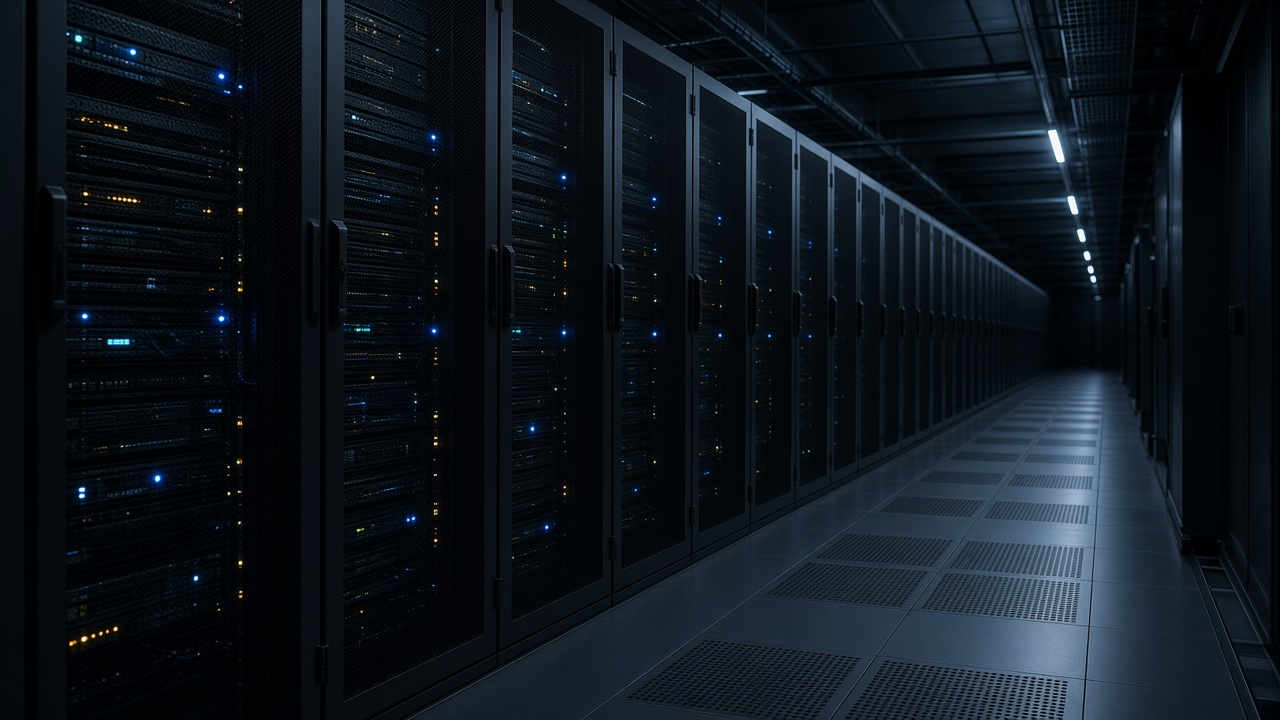
A data center combines network connectivity, compute and storage platforms, rack layouts, power distribution, structured cabling, and environmental control. These systems must be evaluated together to support the operational and capacity objectives of the facility.
Novatelia's infrastructure scope covers network fabric requirements, optical connectivity, storage networking options, rack organization, and physical deployment considerations. The final architecture and equipment schedule depend on the application profile, room characteristics, growth plan, and technical survey.
- ConnectivitySpine and leaf roles, routed paths, and the optical links between them.
- StorageEthernet storage or a separate Fibre Channel network, chosen for the platforms in use.
- PowerRack feeds, PDU selection, and load allocation against the facility supply.
- Thermal ConditionsAirflow, containment, and rack heat considered with the electrical load.
DEPLOYMENT ENVIRONMENTS
Infrastructure for Different Data Center Requirements
Colocation Facilities
Structured rack, optical connectivity, cross-connect, power distribution, and equipment access considerations for shared data center environments.
Enterprise Private Infrastructure
Compute and storage connectivity for organization-controlled infrastructure, virtualization platforms, and internal enterprise applications.
Financial Processing Environments
Network and physical infrastructure planned around the availability, security, and operational requirements of critical business applications.
Disaster Recovery Sites
Infrastructure connectivity, physical equipment planning, and site-level considerations supporting separately defined recovery objectives.
REFERENCE FABRIC ARCHITECTURE
Explore a Modern Data Center Network Fabric
A spine-and-leaf architecture can provide multiple routed paths between network endpoints. Actual bandwidth, oversubscription, latency, availability and overlay technologies depend on the approved design.
Spine
Spine switches interconnect the leaf layer and participate in the routed fabric. The design of equal-cost paths, scale and redundancy depends on the underlay topology.
- Spine
- Spine switches interconnect the leaf layer and participate in the routed fabric. The design of equal-cost paths, scale and redundancy depends on the underlay topology.
- Leaf
- Leaf switches connect servers, storage systems or other attached services and provide connectivity into the fabric.
- Compute
- Server platforms connect to suitable access ports and network interfaces based on application, virtualization and capacity requirements.
- Storage
- Storage connectivity may use Ethernet-based protocols or a separate Fibre Channel SAN according to performance, compatibility and operational needs.
- Border
- Border connectivity provides controlled paths between the data center fabric and other network domains where required.
- Management
- Management connectivity supports device administration, telemetry and operational access according to the chosen design.
Illustrative architecture only. Final network topology, protocols, port speeds and equipment selections are subject to approved engineering requirements.
HIGH-CAPACITY NETWORK FABRICS
Scalable Switching for Compute and Application Traffic
Spine-and-leaf architectures support predictable path structures and multiple routed forwarding options. Depending on the design, technologies such as ECMP and BGP EVPN-VXLAN may be used for underlay forwarding and network virtualization.
Spine switches join the leaf layer. Leaf switches face compute, storage, or other attached services. East–west traffic moves between those leaves through the spines. North–south traffic uses border connectivity when the fabric must reach another domain. Link capacity, oversubscription, segmentation, and uplink redundancy are set from the traffic profile and the growth plan. They are not fixed for every room.
STORAGE CONNECTIVITY
Storage Networks Matched to Workload Requirements
These are alternative ways to connect storage. A project uses the options that match its platforms. They are not all required together.
Dedicated Fibre Channel SAN
Dedicated storage networking using compatible Fibre Channel switches, host adapters, and storage platforms.
iSCSI
Block storage connectivity using IP networks where suitable for the workload and operational requirements.
NVMe over Fabrics
Storage connectivity that extends NVMe access over supported network transports and compatible endpoints.
Ethernet-Based Storage Transport
Protocols such as RoCEv2 may require specific congestion-management and network-design considerations. Priority flow control and explicit congestion notification are relevant only for the Ethernet storage transport and implementation that needs them.
PHYSICAL INFRASTRUCTURE
Precision Inside the Data Center Rack
- 01 — High-Density Server RackingRack layouts and equipment accommodation based on physical dimensions, load ratings and service access.
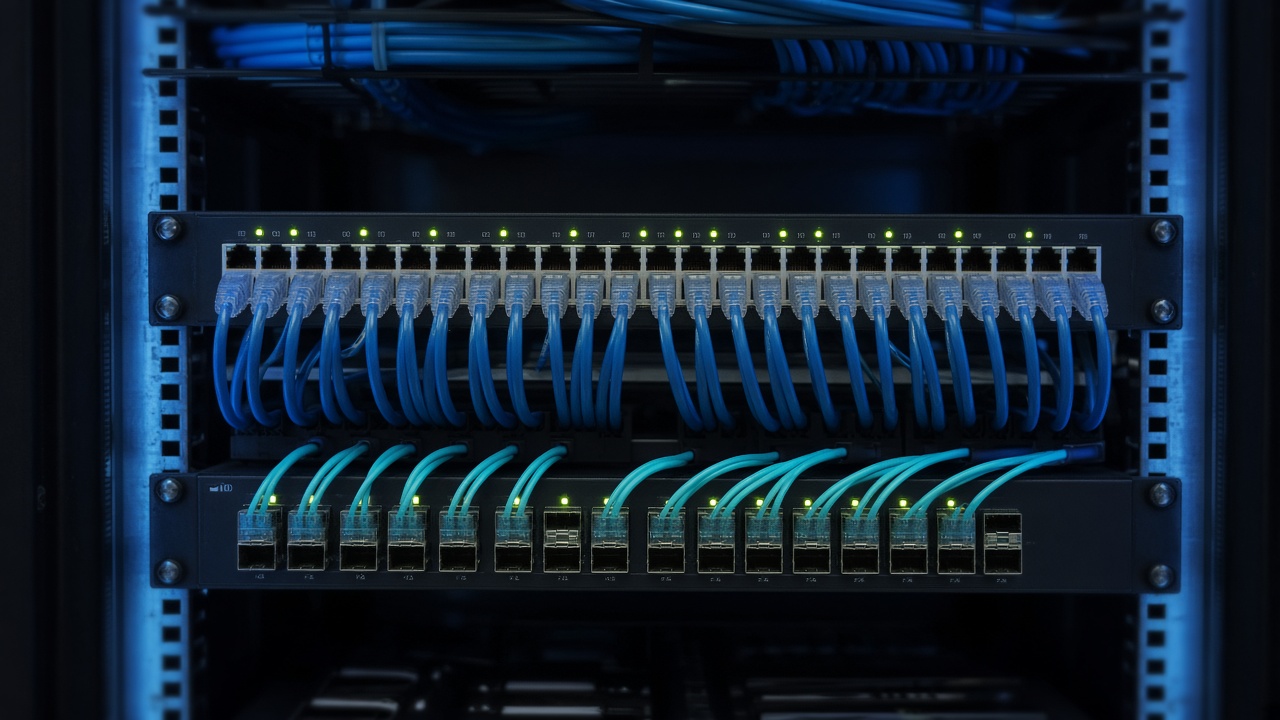
- 02 — Fiber & Copper DistributionStructured optical and copper connectivity with planned cable pathways, labeling and management.
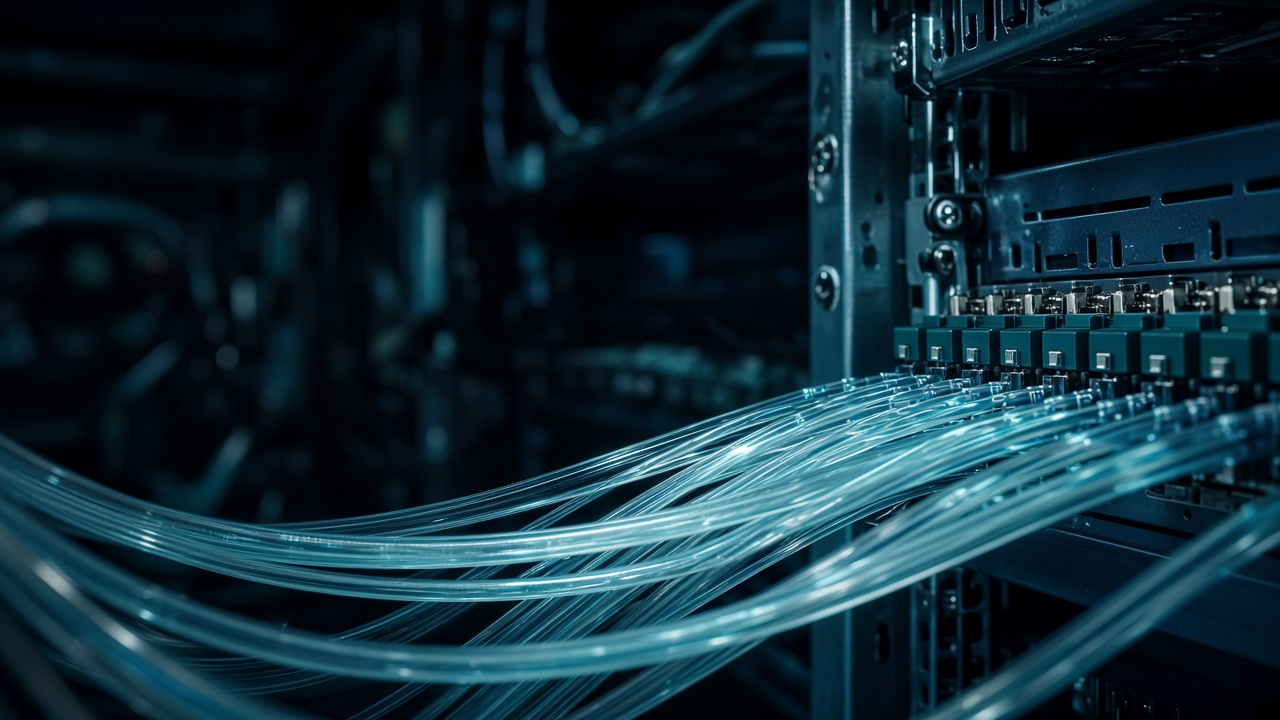
- 03 — MPO/MTP ConnectivityHigh-density optical trunking and patching where suitable for the selected connectivity architecture.
- 04 — Equipment LayoutRack elevations, equipment allocation and physical connectivity planning as defined in the project scope.
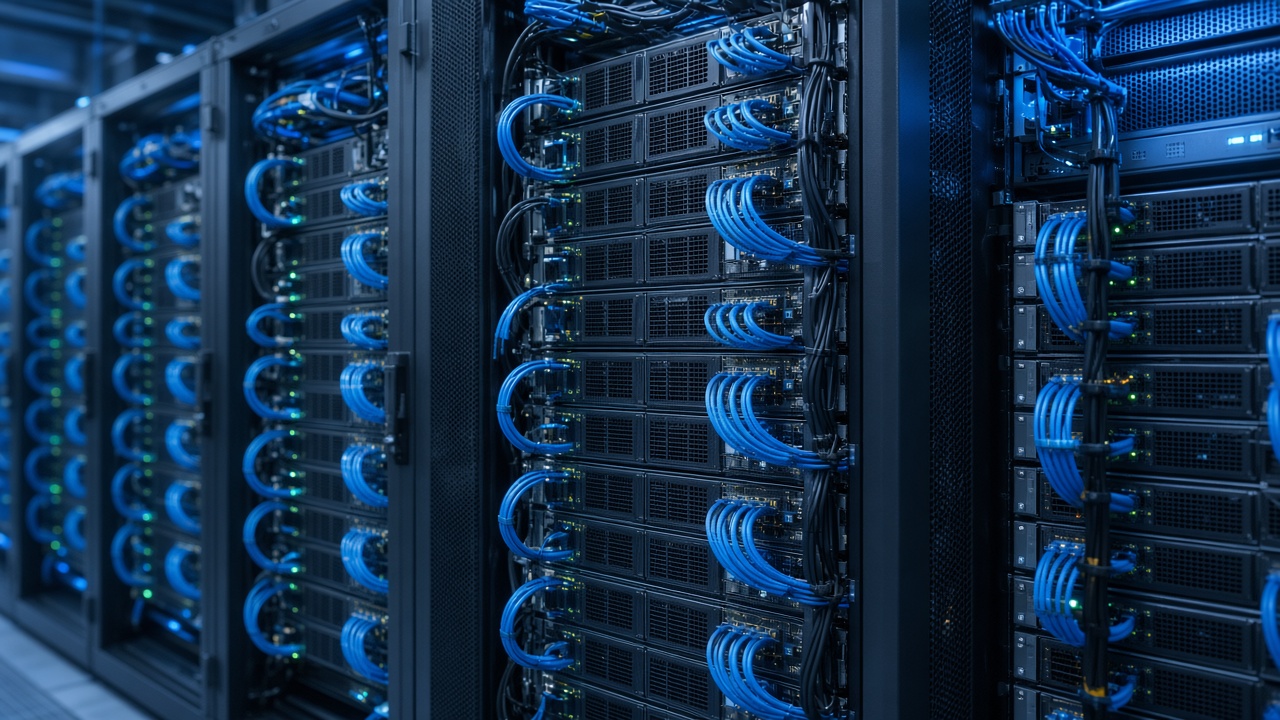
- 05 — Cable ManagementOrganized routing and labeling to support maintainability and operational clarity.
POWER & THERMAL ENVIRONMENT
Power Distribution and Cooling Must Be Planned Together
Data center equipment selection must account for electrical distribution, physical rack loading, airflow, temperature, humidity, and operational requirements. Rack-level power and containment planning should align with the facility's actual electrical and mechanical capabilities.
Power Infrastructure
Rack PDUs, A/B power paths where specified, metering requirements, load allocation, and equipment power compatibility. This is rack-level planning against the supply the facility already has.
Thermal Environment
Hot and cold aisle concepts, airflow management, containment options, rack thermal load planning, and environmental monitoring considerations. ASHRAE guidance can inform the review. It is not a certification of the room.
Novatelia's published scope is rack and infrastructure planning within the contracted work. It is not a claim to deliver complete building mechanical and electrical engineering.
DESIGN & PROJECT DOCUMENTATION
Engineering Outputs for a Defined Scope
The final document set depends on the agreed design, procurement and implementation scope.
01 — Logical & Physical Fabric Diagram
The routed underlay and the physical links between spine, leaf, and attached systems, limited to the agreed design.
02 — Network Equipment BOM / BOQ
Switches, optics, and related materials scheduled from the approved port and capacity requirements.
03 — Optical Connectivity & Patch Schedule
Fiber type, patch positions, and transceiver pairings for the links in the design.
04 — Rack Elevation & Equipment Layout
Where equipment sits in the rack and how service access is kept, when layout work is in scope.
05 — Power and Thermal Planning Inputs
Rack load, feed, and airflow notes prepared from equipment data and the facility conditions supplied for the project.
06 — Configuration & Validation Records
Configurations and test records that the contract names. They are not produced for every enquiry.
RELATED SERVICES
Professional Services Supporting Deployment
Fiber Optic & Structured Cabling
Optical and copper infrastructure, patching, cable pathways, and agreed testing activities.
Testing, Validation & Handover
Applicable network, optical and infrastructure validation activities, together with agreed handover documentation.
Data Center Infrastructure Services
Rack and equipment deployment, structured interconnection, containment-related infrastructure, and physical integration within the contracted scope.
PREPARE YOUR REQUIREMENT
What Information Is Needed Before Data Center Equipment Selection?
- Room dimensions and technical drawings.
- Equipment inventory.
- Rack quantity and available space.
- Compute and storage workload profiles.
- Target network connectivity and port speeds.
- Optical fiber distances and interfaces.
- Electrical feed and PDU requirements.
- Cooling conditions and estimated heat loads.
- Redundancy objectives.
- Expansion projections.
- Existing equipment and interoperability needs.
- Required test and handover scope.
TECHNICAL QUESTIONS
Data Center Infrastructure — Frequently Asked Questions
What is a spine-and-leaf network architecture?
Spine-and-leaf is a data center switching topology in which leaf switches connect endpoints and spine switches interconnect the leaf layer. It is commonly used to support scalable routed network designs.
Is EVPN-VXLAN required in every data center?
No. EVPN-VXLAN may be appropriate for some environments, while other network architectures can satisfy different requirements. Technology selection depends on the workload, network size and operational model.
Does this solution include storage area networking?
Storage networking can be considered within the infrastructure design, using technologies appropriate to the storage platforms, host systems and agreed scope.
Does this page provide public-cloud subscriptions?
No. This page focuses on data center networking, storage connectivity and physical infrastructure. Cloud productivity and subscription services are addressed separately.
How are rack power and cooling requirements determined?
They are assessed using equipment specifications, facility conditions, expected electrical demand, airflow characteristics and applicable engineering requirements.
Can Novatelia prepare a data center BOM?
A project-specific bill of materials can be prepared as part of an agreed design or quotation process after the required technical details are established.
EXPLORE CONNECTED SOLUTIONS
Related Enterprise Infrastructure
DEFINE YOUR DATA CENTER REQUIREMENTS
Ready to Plan Your Data Center Infrastructure?
Share your equipment list, network architecture requirements, facility information, or preliminary technical specification with Novatelia for review.
Opening the RFQ page keeps a browser draft. It does not submit a quotation or issue a reference.