

Enterprise & Corporate Campuses
IND-01 · ENTERPRISE INFRASTRUCTURE
Engineering Connected, Secure and Resilient Corporate Environments
High-availability campus LANs, secure multi-branch SD-WAN, and executive collaboration spaces.
This blueprint covers campus networks, corporate wireless, branch connectivity, identity, and the applications those paths carry. It is an industry blueprint, not a completed Novatelia customer deployment.
Explore the Infrastructure of a Connected Enterprise Campus
Eight zones describe a conceptual campus. Some designs collapse the core and distribution into one layer. A data-center spine-and-leaf fabric is not assumed.
Conceptual enterprise architecture — not an actual customer design or verified deployed network.
01
Campus Core
High-capacity aggregation and routing for the site. The core is a role. It is not a promise of a particular chassis or a measured failover time.
02
Distribution Layer
Where the design uses a distribution layer, it aggregates access switches and can hold policy boundaries. Smaller campuses may not have this layer at all.
03
Access Layer
Wired endpoints, PoE, VLANs, and access switches. VLAN tagging is IEEE 802.1Q. It is not IEEE 802.1X.
04
Enterprise Wireless
Access points, RF design, client density, and mobility. Coverage and throughput stay design targets until a survey and a test say otherwise.
05
Identity & Network Access
802.1X, identity, device posture, and authorization where the endpoints support them. This is campus network access control, not ZTNA.
06
Branch Connectivity
WAN or SD-WAN between a headquarters and branches, using transports the organization actually has. No bandwidth or carrier contract is stated.
07
Security Boundaries
Segmentation, firewall policy, and an approved remote-access architecture. A boundary on a drawing is not a certified zero-trust network.
08
Enterprise Applications & Communications
ERP, collaboration, VoIP, and cloud applications depend on the path and on the application owner. The network does not by itself make those services available.
Three Critical Challenges in Corporate Network Architecture
01
Managing high-density wireless environments across executive floors and meeting rooms
Executive floors and meeting rooms concentrate clients. Planning covers concurrency, interference, roaming, and access-point placement. Wi-Fi 6E or 7 helps only where devices and local radio rules allow it. Coverage is not guaranteed.
02
Enforcing strict zero-trust network access (ZTNA) across corporate and BYOD devices
Corporate endpoints and BYOD need different identity and authorization. ZTNA reaches applications after a policy check. Campus 802.1X NAC admits a device to a segment. They are not interchangeable, and neither phrase certifies a zero-trust architecture.
03
Maintaining 99.999% uptime for cloud ERP and VoIP communications
Cloud ERP and VoIP fail when the path, the WAN, or the application fails. Diversity and failover are design topics. The 99.999% figure is an ambitious requirement, not a measured or contracted result.
Wireless Experience Across Offices, Meeting Rooms and Shared Spaces
The floor types below are planning questions, not a certified RF survey and not signal-strength readings.
01
Executive floors
Fewer users can still mean dense devices. Placement has to respect rooms, not only corridors.
02
Meeting rooms
Concurrent laptops and conferencing clients raise airtime use. Capacity matters as much as coverage.
03
Roaming
People walk between rooms. The client radio decides the handoff. The design can only prepare for it.
04
Overlap and interference
Neighboring access points and building materials change the plan. Overlap on a sketch is not a prediction of throughput.
Identity-Aware Access for Corporate and BYOD Devices
A practical sequence is user or device, then authentication and authorization, then network access, then a segmented resource. Identity, posture, NAC, ZTNA, segmentation, and remote access are different controls.
Zero trust is not one switch setting. A VLAN does not by itself protect an enterprise. No live security platform is simulated here.
Connecting Headquarters, Branches and Cloud Services
A conceptual path runs from headquarters and branch sites through a WAN or SD-WAN edge toward approved cloud applications, with a security boundary at each edge. The technology follows the design.
This page does not state WAN bandwidth, carrier availability, latency, MPLS orders, cloud interconnects, or failover times. Novatelia is not described as a telecommunications carrier.
Infrastructure for Meetings, Collaboration and Business Applications
Meeting rooms need network ports, PoE, wireless, and a path for voice and conferencing traffic into the business applications people are allowed to open.
No collaboration-system certification or manufacturer partnership is claimed. Room products stay in their own scope.
Designing for Availability Without Inventing Guarantees
Resilience is about redundant paths where they were designed, uplink and equipment dependencies, failover tests, power, WAN diversity, maintenance, and the application’s own fault domain.
There is no universal 99.999% promise and no claim that every design has zero single points of failure.
Security Governance and Oman Regulatory Considerations
- ISO/IEC 27001 Information Security Management
- Oman Ministry of Transport, Communications and IT (MTCIT) data sovereignty guidelines
ISO/IEC 27001 concerns an information security management system. It does not certify a campus network or Novatelia. MTCIT data-sovereignty wording in the source is context. Data location has to be judged for the organization, the law, and the information type. No ISO certificate, government approval, or regulatory endorsement is claimed.
Cybersecurity Considerations for Corporate Campuses
These names are project topics. They are not a sector certification, a clearance, or a managed SOC. None is deployed by default.
01
Endpoint Security & EDR
Endpoint detection applies to managed corporate devices the product supports. It is not a sector certification, a clearance, or a managed SOC.
02
SIEM & Security Analytics
SIEM analytics need log sources and a review duty. They are not a staffed SOC. It is not a sector certification, a clearance, or a managed SOC.
03
Identity & Access Security
Identity and access security decides who may reach which resource. It is not a sector certification, a clearance, or a managed SOC.
04
Unified Endpoint Management (UEM)
UEM covers devices the organization is licensed to enroll. It is not a sector certification, a clearance, or a managed SOC.
05
Vulnerability & Patch Management
Vulnerability and patch work follows a change window and vendor support. It is not a sector certification, a clearance, or a managed SOC.
06
Secure Remote Access VPN
VPN is one remote-access method. It is not ZTNA and not 802.1X. It is not a sector certification, a clearance, or a managed SOC.
07
Data Protection & Device Control
Data protection and device control depend on the platforms that can enforce them. It is not a sector certification, a clearance, or a managed SOC.
Related Enterprise Solution Architectures
Two related architectures. Absolute claims such as zero downtime are not repeated from destination summaries.
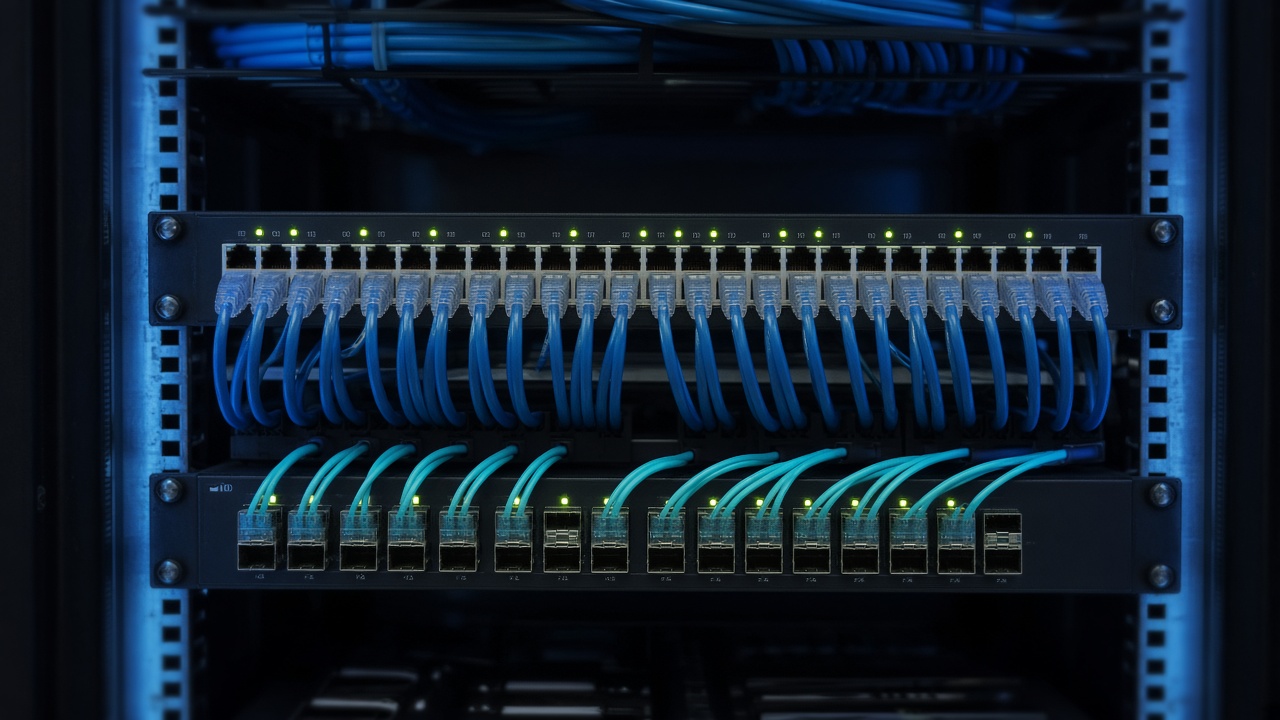
Enterprise Campus Networking
Campus switching, wireless, and branch connectivity as an architecture reference. Inclusion still depends on the project scope.
Enterprise Campus Networking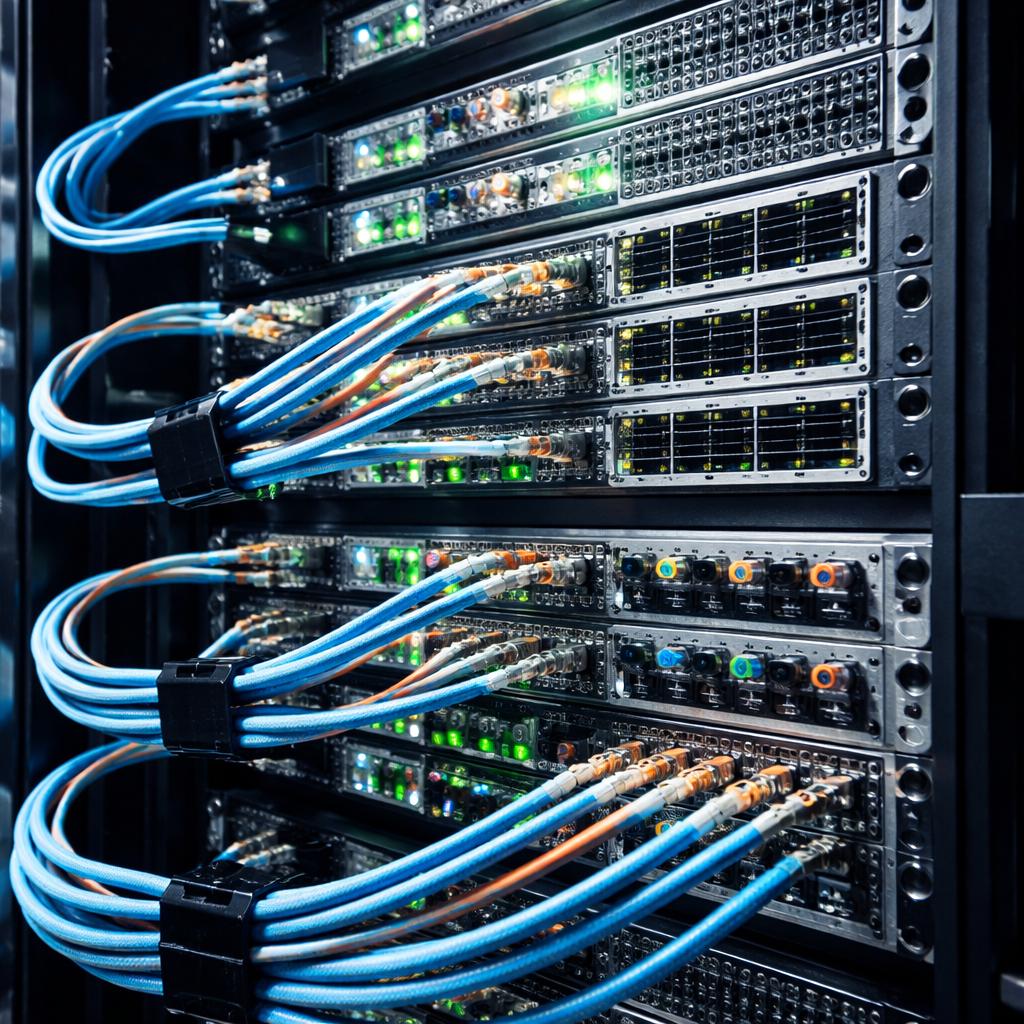
Cybersecurity & Security Infrastructure
Security architecture for identity, segmentation, and monitoring design. It is not a certified zero-trust product badge.
Cybersecurity & Security Infrastructure
Engineering Services Supporting Enterprise Infrastructure
Design defines the architecture. Installation performs approved physical work. A maintenance agreement states the coverage that was signed. Installation does not by itself create a certified TIA-606-C environment, and dispatch hours are not invented here.

Network & Infrastructure Design
Requirements and architecture before equipment is ordered.
Network & Infrastructure Design
IT Infrastructure Professional Installation
Physical installation of the approved design. Labeling standards are context, not an automatic certificate.
IT Infrastructure Professional Installation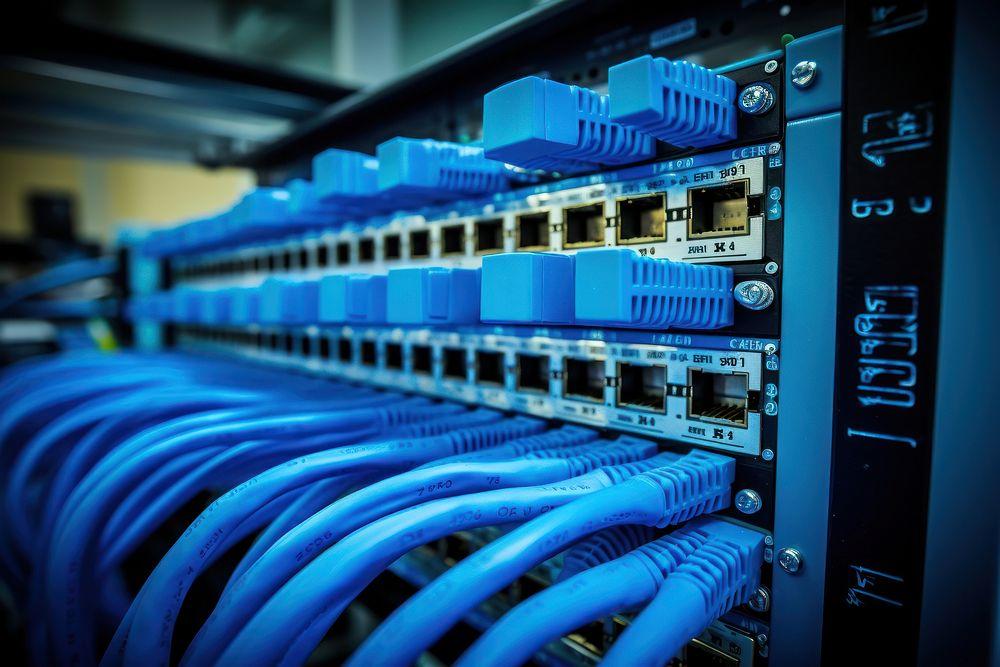
Infrastructure Maintenance Agreements & SLA
Contractual coverage, windows, and exclusions. Spare stock is only what the agreement names.
Infrastructure Maintenance Agreements & SLA
From Corporate Requirements to a Defined Infrastructure Blueprint
Five planning stages. They are educational. They are not a guaranteed contractual process and they contain no project milestones.
01
Understand corporate operating requirements
Sites, working patterns, and the applications that have to stay reachable.
02
Review sites, users, devices and application dependencies
Counts and device types come from the customer. They are not assumed.
03
Evaluate network, wireless, security and WAN architecture
Each domain can be in or out of scope.
04
Define scope, BOM and implementation dependencies
A bill of materials follows the design. It is not implied by this page.
05
Plan validation, handover and appropriate maintenance
Tests and support exist only as the agreement describes them.
Enterprise & Corporate Campus Infrastructure — Questions and Answers
01What is an enterprise campus network?
It is the LAN, wireless, and routing design that connects buildings, floors, and users on a corporate site. The published page describes requirements, not a live customer network.
02What does corporate campus networking include?
Typical scope covers switching, Wi-Fi, identity-based access, branch WAN or SD-WAN, and connectivity for collaboration, ERP, and voice. Each item is included only when the scope names it.
03What is the difference between core, distribution and access layers?
Access connects endpoints. Distribution, where the design uses it, aggregates access and applies policy. Core moves traffic between those aggregation points. The names describe roles, not a mandatory three-box purchase.
04Is a three-tier network always necessary?
No. Smaller sites often use a collapsed core. A data-center spine-and-leaf fabric is a different architecture and is not the default campus design.
05How is high-density office Wi-Fi planned?
Planners look at concurrent clients, room types, channel use, access-point placement, and roaming. The result is a design to test, not a guaranteed throughput.
06What is the role of Wi-Fi 6E and Wi-Fi 7 in corporate environments?
They can add spectrum and capacity where the devices support them and local radio rules allow the band. They do not by themselves guarantee coverage.
07How does SD-WAN connect corporate branches?
An SD-WAN edge can steer approved traffic between a headquarters, branches, and cloud applications over the transports the organization actually has. Bandwidth, latency, and failover times are not invented here.
08What does ZTNA mean?
Zero Trust Network Access grants an application path after identity and policy checks. It is not a single switch command, and it is not the same control as campus 802.1X.
09What is the difference between NAC and ZTNA?
Network access control, often using IEEE 802.1X, decides whether a device may join a LAN segment. ZTNA decides whether an identity may reach an application, including from outside the campus. IEEE 802.1X is not VLAN tagging, which is IEEE 802.1Q.
10How can BYOD access be separated from corporate resources?
Personal devices can sit on a different SSID, VLAN, or identity policy than managed endpoints. Separation still needs enforcement beyond the VLAN name.
11What network architecture considerations affect VoIP?
Voice depends on reachability, jitter, loss, power for phones, and the call-control platform. Quality of service is a design choice, not proof that calls will never drop.
12What does high availability mean for business applications?
It means the design reduces the impact of a failed link, device, or path. It is an objective. It is not a measured uptime result.
13Does Novatelia guarantee 99.999% uptime?
No. That figure is an ambitious requirement in the source record for cloud ERP and VoIP. It is not a contracted guarantee.
14How is network segmentation planned?
Segmentation follows users, devices, and applications that must stay apart, plus the firewall and identity rules that enforce the split. A VLAN name alone is not the control.
15What is the role of EDR and UEM?
Endpoint detection and response watches managed endpoints. Unified endpoint management inventories and configures devices the organization is allowed to manage. Neither is automatic for every laptop.
16Can SIEM be part of a corporate security architecture?
Yes, when log sources, retention, and review duties are in scope. Collecting logs is not the same as a staffed security operations center.
17Does this industry page certify ISO/IEC 27001 compliance?
No. ISO/IEC 27001 describes an information security management system. Mentioning it does not certify Novatelia or a campus network.
18What Oman data governance requirements may be relevant?
Data location and government requirements depend on the organization, the information, and current law. MTCIT is named as context from the source record, not as an approval.
19Which Novatelia services support corporate infrastructure projects?
The published set is network and infrastructure design, professional installation, and infrastructure maintenance agreements. Each one starts only when it is scoped.
20How can a company request an enterprise campus architecture review?
Use the RFQ draft for this industry or contact Novatelia. The RFQ page keeps a browser draft. It does not submit a quotation or issue a reference.
Plan Your Enterprise Campus Infrastructure with Engineering Clarity
The RFQ page keeps a browser draft. It does not submit a quotation or issue a reference.
Opening the RFQ draft does not activate a project, issue a reference, or set service hours.