
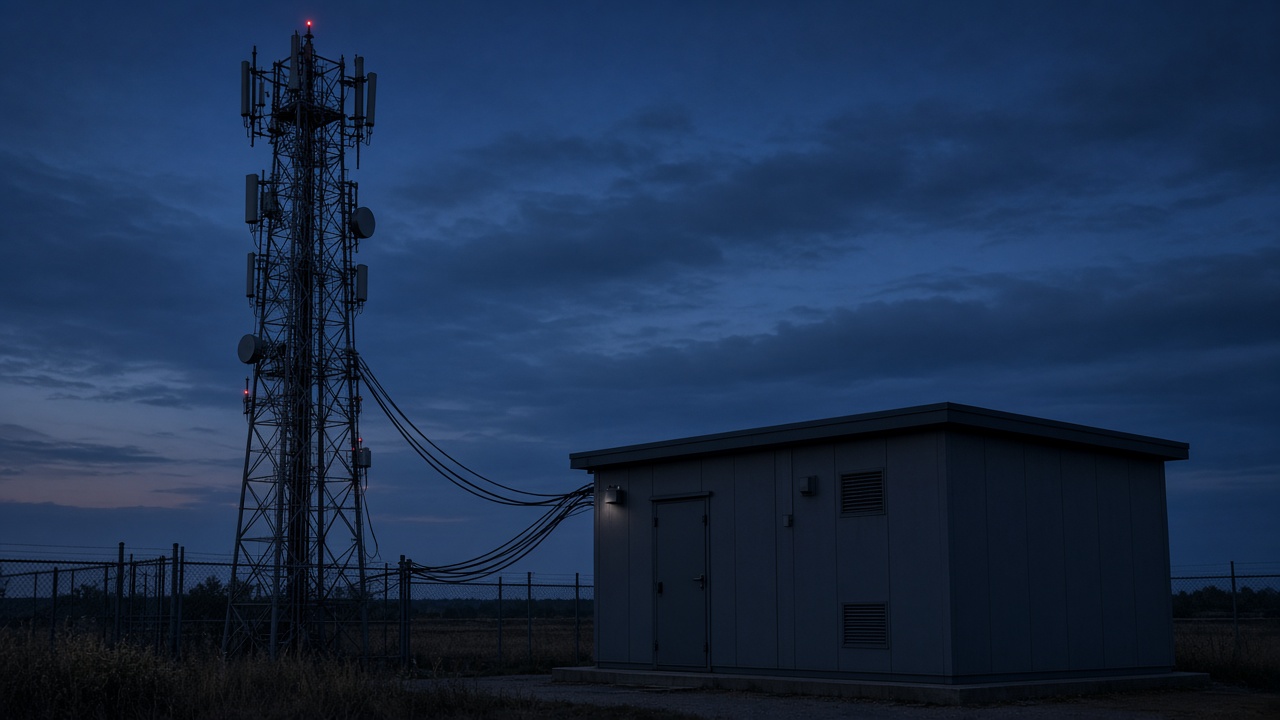
Telecom & Service Provider Core
CARRIER PACKET ENGINEERING
Engineering the Core of Service Provider Connectivity
Carrier networks interconnect customers, access systems, service platforms, internet exchanges and external networks through scalable routing infrastructure. Network design must account for traffic patterns, routing requirements, subscriber services, addressing, availability and operational growth.
- Core & Edge RoutingP and PE roles, external peers, and the interfaces those roles require.
- Traffic EngineeringSegment Routing or another steering method, only when the operator's design uses it.
- Subscriber ServicesBNG functions, addressing, and the policies applied to subscriber traffic.
OPERATOR ENVIRONMENTS
Infrastructure for Networks That Connect Entire Markets
Internet Service Providers
Core and edge routing, external peering, broadband subscriber aggregation and address-management infrastructure.
Telecom Operators
High-capacity IP transport, service routing and subscriber infrastructure for operator-defined packet networks.
National & Regional Backbones
Multi-site routed backbone architectures planned around capacity, path diversity and operational requirements.
Internet Exchange Facilities
Peering connectivity, router integration and interconnection requirements within applicable exchange policies.
SERVICE PROVIDER ARCHITECTURE
Explore the Architecture of a Service Provider Network
P routers
P routers generally forward traffic through a provider core. In this example they connect to each other and to the provider-edge routers.
Core and edge routing
P routers forward through the core. PE routers face services, transit, and peering. BGP sessions sit where the policy places them.
- Upstream and peering
- Transit and exchange connectivity attach at the provider edge or a border role. They are not drawn as attachments on every core router.
- P routers
- P routers generally forward traffic through a provider core. In this example they connect to each other and to the provider-edge routers.
- PE routers
- PE routers provide connectivity and the relevant service functions at the provider edge, including the BGP sessions the design places there.
- Service networks
- Customer and service-facing networks terminate on the PE role, not directly on the P routers in this reference.
Segment Routing
A headend can steer traffic onto a selected path. Restoration time depends on the implementation and the failure. This drawing does not state a universal failover time.
- Headend
- The headend imposes the Segment Routing instructions for the selected policy.
- Transit routers
- Transit routers forward according to the instructions. They are not a second control plane in this drawing.
- Destination
- The far end of the example. More than one candidate path can reach it.
- Selected policy
- One candidate path is shown as the selected policy. SR-MPLS and SRv6 are different ways to carry those instructions, chosen in the design.
Broadband subscriber access
The path is access, aggregation, BNG, then IP services. AAA, subscriber policy, addressing, QoS, and CGNAT stay visible as separate functions.
- Access network
- The access network delivers subscriber traffic toward aggregation. This page does not describe radio or spectrum engineering.
- Aggregation
- Aggregation collects access traffic before subscriber session functions.
- BNG
- A broadband network gateway provides subscriber session and service functions, including authentication integration, addressing, and policy enforcement where those are in scope.
- IP services and internet
- After the BNG, traffic reaches the IP services and internet connectivity the design defines.
- AAA / RADIUS
- Authentication, authorization, and accounting are a distinct function the BNG can integrate. They are not the BNG itself.
- CGNAT, when used
- Carrier-grade NAT is an address-sharing function. It is optional, and it is not the same device role as the BNG.
CORE AND EDGE PLATFORMS
Routing Platforms for Demanding Network Environments
Core routers and provider-edge routers do different jobs. A modular chassis or a fixed platform is a selection against route scale, interface mix, and the redundancy the operator asks for. RIB and FIB capacity, BGP scale, and IPv4 and IPv6 forwarding are sizing inputs. They are not a published throughput promise. Optical capacity follows the spans. Control-plane redundancy and other high-availability choices depend on the platform and the topology.
ROUTING CONTROL
Secure and Controlled Internet Routing
External BGP carries routes with other networks. Internal BGP carries them inside the operator's own routing system. Transit and internet-exchange connectivity are different peering relationships, each with its own policy.
- Prefix filtering on what the peer is allowed to announce.
- Route policy for local preference, communities, and what is readvertised.
- RPKI route-origin validation, which checks an origin. It does not validate the full AS path and it does not stop every routing attack.
- Maximum-prefix controls so one session cannot exhaust the router.
- Routing monitoring so a policy change can be seen after it is applied.
TRAFFIC STEERING
Traffic Engineering with Segment Routing
Segment Routing can express a path as instructions imposed at a headend. SR-MPLS and SRv6 are two instantiations. An SR policy can prefer one candidate path and keep another. Protection behavior, including any fast reroute the platform implements, still depends on that platform and on the failure. This page does not publish a failover time.
SUBSCRIBER EDGE
Broadband Subscriber Management at Network Scale
A BNG terminates subscriber sessions and applies the service functions in scope. Those can include PPPoE or IPoE, AAA and RADIUS integration, IPv4 and IPv6 provisioning, subscriber policy, and hierarchical QoS where the selected platform supports it. Operations and monitoring cover the sessions the gateway is actually running.
ADDRESSING
IPv4 Conservation and IPv6 Transition Planning
CGNAT shares public IPv4 addresses among subscribers. Session scale, port allocation, the ability to correlate a subscriber to a translation, and the logging the applicable rules require are design inputs. IPv6 provisioning is planned with that choice, not after it. CGNAT is not a BNG. An operator can use either, both, or neither, depending on addressing and the subscriber architecture.
TRAFFIC TREATMENT
Traffic Policies Aligned With Application Requirements
Classification, marking, shaping, policing, scheduling, and congestion management describe how named traffic is treated. Subscriber QoS is the same idea applied at the session or service the BNG understands. No throughput or delay figure is published here. The policy is written for the classes the operator defines.
RESILIENCE AND OPERATIONS
Planning for Faults, Maintenance and Operational Visibility
- Route-processor redundancy where the platform and the design include it.
- Link diversity so one span is not the only path.
- Routing reconvergence as a behavior to test, not a published interval.
- BFD where the design uses it to detect forwarding failure faster than routing hellos.
- Monitoring and telemetry for the routers and sessions in scope.
- Maintenance planning and fault-domain isolation for the change window.
DESIGN OUTPUTS
Documentation That Moves a Core Network Toward Implementation
The final deliverables depend on the agreed engineering and implementation scope.
01 — IP/MPLS Core Architecture
The routed core and the service edge, limited to the architecture the operator has agreed.
02 — P/PE Routing Topology
Which routers forward through the core and which routers face services or external peers.
03 — BGP Peering & Routing Policy Matrix
Peers, accepted prefixes, and the filters the policy will apply.
04 — Segment Routing Policy Plan
Candidate paths and the policy that selects among them, when Segment Routing is in scope.
05 — BNG & Subscriber Design Inputs
Session types, authentication, addressing, and policy inputs for the subscriber edge.
06 — Equipment & Optical Interface BOM
Platforms and optical interfaces scheduled from the agreed port and reach requirements.
07 — QoS Design
Classification and treatment for the traffic classes the operator names.
08 — Validation & Change-Control Plan
The checks and the change steps the contract includes. It is not a completed switchover report.
NETWORK LIFECYCLE
Services Across the Network Lifecycle
Network & Infrastructure Design
Architecture planning, routing requirements, topology evaluation and technical documentation.
Technology Procurement & Multi-Vendor Sourcing
Procurement support for approved routing platforms, optical interfaces and manufacturer part numbers.
L2 & L3 Network Technical Support
Technical investigation and escalation for routing, connectivity and network operation issues within the contracted support scope.
BEFORE PLATFORM SELECTION
What Information Is Needed Before Carrier Platform Selection?
- Existing topology.
- Target architecture.
- ASN and addressing requirements.
- Routing protocols.
- BGP route scale.
- Interface quantities and speeds.
- Subscriber count.
- Traffic forecasts.
- QoS requirements.
- Resilience objectives.
- Equipment compatibility.
- Deployment locations.
- Expansion plans.
OPERATOR QUESTIONS
Telecom & Service Provider Core — Frequently Asked Questions
What is a service provider core network?
A service provider core network connects network domains, service platforms and external networks through routing infrastructure designed for the provider's scale and operational requirements.
What is the difference between P and PE routers?
P routers generally forward traffic through a provider core, while PE routers provide connectivity and relevant service functions at the provider edge.
What is Segment Routing?
Segment Routing is a source-routing approach that can encode forwarding instructions to support selected paths or network behaviors.
What does a Broadband Network Gateway do?
A BNG provides broadband subscriber session and service functions, including relevant authentication integration, addressing and policy enforcement.
Is CGNAT required for every ISP?
No. Its suitability depends on IPv4 availability, addressing strategy, subscriber architecture and IPv6 planning.
Does this page cover spectrum or radio engineering?
No. This page addresses packet-based core and edge routing, subscriber infrastructure and related connectivity.
Can Novatelia prepare a telecom core BOM?
A project-specific equipment schedule can be developed through an agreed engineering or quotation process after technical requirements have been defined.
CONNECTED INFRASTRUCTURE
Related Enterprise Technology Solutions


ENGINEER YOUR NETWORK CORE
Planning a Carrier or ISP Network Upgrade?
Share your current topology, routing requirements, interface specifications or preliminary equipment list with Novatelia for technical review.
Opening the RFQ page keeps a browser draft. It does not submit a quotation or issue a reference.