

AI & High-Performance Computing
THE FOUNDATION OF AI COMPUTE
Advanced Computing Depends on the Infrastructure Between the Nodes
AI and HPC environments require carefully planned connectivity between compute nodes, storage systems, management services and external networks. Fabric architecture, interface capacity, network topology and data movement affect the ability of a cluster to support demanding parallel workloads.
The appropriate infrastructure depends on the compute platform, application communication pattern, node count, supported interfaces, storage design and facility conditions. These requirements must be assessed before an equipment BOM is finalized.
- GPU Compute InterconnectScale-out fabrics between nodes, and scale-up links only inside the platform that provides them.
- Storage & Data AccessA path from storage systems to compute nodes, sized from the I/O the workload describes.
- Network ManagementAdministration and telemetry, kept distinct from the compute fabric.
- Power & Thermal ConstraintsElectrical capacity, airflow, and cooling approach taken from the facility and the server generation.
HIGH-PERFORMANCE COMPUTE ENVIRONMENTS
Infrastructure for Research, Enterprise AI and HPC
AI Research Centers
Infrastructure connectivity supporting distributed compute resources and research workloads, with network architecture selected for the required cluster design.
University Supercomputing Facilities
High-performance interconnects and storage-network planning for scientific and academic computing environments.
Enterprise AI Labs
Cluster networking and storage connectivity for organization-controlled AI development and compute infrastructure.
Sovereign AI Infrastructure
On-premises or locally hosted compute-network infrastructure designed around the customer's operational, connectivity and data-location requirements.
A local or on-premises placement is not a claim of sovereign-cloud regulatory compliance.
REFERENCE AI CLUSTER ARCHITECTURE
Explore the Networks Behind a GPU Cluster
Modern AI and HPC clusters may use distinct fabrics for GPU communication, storage access, external connectivity and management. Each network has different latency, bandwidth, security and operational requirements.
Fabric leaf
Leaf switches face the compute nodes. Every illustrated leaf connects to each illustrated spine.
Scale-out compute fabric
The scale-out fabric connects compute nodes for distributed workloads. Depending on the platform, InfiniBand or Ethernet/RoCEv2 may be selected to support high-bandwidth inter-node communication.
- GPU compute node
- A server that holds the accelerators. Its high-speed adapters attach to a leaf switch, not directly to a spine.
- High-speed adapter
- A NIC or host channel adapter selected for the fabric. The port type has to match the switch and the cable.
- Fabric leaf
- Leaf switches face the compute nodes. Every illustrated leaf connects to each illustrated spine.
- Fabric spine
- Spine switches join the leaves. They are not drawn as direct GPU attachments.
Scale-up interconnect
Scale-up interconnects connect accelerators within a supported server or integrated compute domain. Their architecture and availability depend on the selected compute platform. This is not external InfiniBand or Ethernet.
- Compute domain
- Scale-up connectivity stays inside a supported server or integrated compute domain. It is not the external cluster fabric.
- Accelerator
- Accelerators in that domain use the platform interconnect. Novatelia does not supply a proprietary GPU interconnect.
Storage and data ingestion
Storage connectivity must be evaluated against workload I/O patterns, storage performance, network capacity and compute-node requirements.
- Storage systems
- Storage servers or arrays that hold the data the cluster reads and writes.
- Storage network
- Switches and adapters that carry storage traffic. This path is planned separately from the GPU scale-out fabric when the design calls for that separation.
- Compute-node interfaces
- The node interfaces that receive storage traffic. The drawing does not send that traffic straight into GPU memory.
- Data-access layer
- A parallel file system or other data-access method can sit on this network. Novatelia does not publish a proprietary file system.
Management and external access
Out-of-band management and external access are separate from compute and storage traffic when the design specifies that separation.
- Management switches
- A management domain for administration. It is not the path used for GPU-to-GPU traffic.
- Node management interfaces
- Out-of-band or in-band management ports on the compute nodes, kept distinct from the compute adapters.
- Monitoring
- Telemetry and administration systems attached to the management domain.
- External connectivity
- A controlled path out of the cluster for users or other networks, separate from storage and compute fabrics.
Conceptual infrastructure architecture. Final fabrics, interconnects, port speeds, rail topology and equipment specifications depend on the approved cluster design.
HIGH-PERFORMANCE FABRIC TECHNOLOGIES
Selecting the Right Interconnect for Parallel Workloads
InfiniBand
InfiniBand is a high-performance interconnect technology used in supported HPC and AI cluster environments. Its management model, routing, congestion controls and transport characteristics depend on the implemented architecture.
- Host channel adapters on the nodes that join the fabric.
- InfiniBand switches for that fabric, not assumed to be Ethernet switches.
- Subnet management for the InfiniBand network.
- Topology planning for the node count and the failure domains.
- Congestion-management features that belong to the chosen implementation.
Ethernet / RoCEv2
RoCEv2 supports RDMA transport over compatible Ethernet infrastructure. Effective deployment requires coordinated adapter, switching, congestion-control and traffic-management design.
- RDMA-capable NICs.
- Ethernet switches that the design has checked for this use.
- Explicit congestion notification where the transport needs it.
- Priority flow control only where that Ethernet design calls for it.
- Congestion management and telemetry for the implemented network.
InfiniBand and RoCEv2 are not interchangeable at every layer. This page does not claim zero packet loss or a fixed switching delay.
FABRIC ARCHITECTURE
Network Topology Designed for Cluster Communication
A leaf-and-spine layout gives each leaf a path to each spine in the example. A rail-optimized layout groups the same adapter position on every node onto one switch. That grouping is useful for some collective-communication patterns. It is not a requirement for every cluster. Link capacity, oversubscription, fault domains, path diversity, and scale follow the node count and the traffic the application produces.
HIGH-SPEED PHYSICAL CONNECTIVITY
Every Connection Must Match the Equipment and Distance
High-speed AI fabrics require carefully selected optical and copper interconnects. Port standards, supported form factors, cable lengths, power characteristics and vendor compatibility affect the final connectivity schedule.
- QSFP-family interfaces, only on ports that accept that family.
- OSFP interfaces, which are not a substitute for every QSFP port.
- Direct-attach copper for the short reaches the port allows.
- Active copper, which remains copper. It is not an optical link.
- Active optical cables where the reach and the port support them.
- Pluggable optical transceivers matched to the fiber and the port.
- Fiber patching and structured connectivity for the longer paths.
No cable family is assumed to fit every switch or GPU adapter. Power draw is a per-module figure, not a single low-power claim.
STORAGE NETWORK ENGINEERING
Moving Data Between Storage and Compute
AI and HPC workloads may require substantial data movement between storage systems and compute nodes. Network design should consider expected read/write patterns, concurrency, file-system architecture, storage performance and available bandwidth.
The storage-facing network, any parallel file system the customer already uses, congestion on that path, and the way data is ingested are reviewed with the compute fabric. They are not assumed to remove an I/O limit, and they are not given a published throughput number on this page.
PHYSICAL INFRASTRUCTURE READINESS
High-Density Compute Starts With Facility Planning
GPU infrastructure must be assessed against available electrical capacity, rack loading, cable pathways, cooling approach and the facility's environmental conditions. These requirements vary significantly by server generation and proposed cluster design.
Rack Planning
Equipment dimensions, rack load ratings, cabling access, service clearance, and rack elevations.
Electrical Requirements
Rack power demand, PDU specifications, available electrical capacity, and power redundancy requirements.
Thermal Considerations
Air cooling, liquid-cooling interfaces where the server requires them, heat-load estimation, containment, airflow, and facility compatibility. Liquid cooling is not assumed for every cluster.
This is rack and facility-input planning within the contracted scope. It is not a claim to deliver complete building mechanical and electrical engineering.
TECHNICAL DESIGN OUTPUTS
From Cluster Requirements to an Infrastructure BOM
The final engineering documentation depends on the approved project scope, selected platforms and agreed validation requirements.
01 — GPU Cluster Network Topology
The compute, storage, and management networks in the agreed design, drawn as separate functions where they are separate.
02 — Compute Fabric Switch Mapping
Which nodes attach to which leaves, and how those leaves join the spines, for the selected fabric.
03 — Interface & Optical Connectivity Schedule
Port types, cable families, and optical or copper links matched to distance and the equipment that will use them.
04 — InfiniBand / RoCEv2 Design Parameters
The fabric choice and the parameters that belong to that choice. One project does not automatically receive both designs.
05 — Storage Network Connectivity Plan
How storage systems reach compute nodes, including capacity notes taken from the workload description.
06 — Rack & Power Requirement Inputs
Dimensions, load, and electrical notes prepared from the server data and the facility information supplied for the project.
07 — Validation & Handover Test Plan
The checks named in the contract. A plan is not a completed benchmark report.
PREPARE YOUR CLUSTER REQUIREMENT
What Information Is Needed Before Selecting AI Fabric Equipment?
- Compute platform and GPU server model.
- Number of nodes.
- Network adapters per node.
- Required interface speeds.
- InfiniBand or Ethernet preference.
- Workload characteristics.
- Storage architecture.
- Expected network traffic.
- Rack locations.
- Interconnect distances.
- Existing switches and optics.
- Electrical constraints.
- Cooling requirements.
- Future expansion.
- Preferred vendors.
- Existing BOM / BOQ.
- Required test and documentation scope.
SUPPORTING PROFESSIONAL SERVICES
Services Supporting AI Infrastructure Deployment
Technology Procurement & Multi-Vendor Sourcing
Equipment sourcing and technical procurement support for compatible switching platforms, network adapters, optical modules and related infrastructure.
Testing, Validation & Handover
Agreed physical network testing, connectivity validation and handover documentation according to the selected technology and project requirements.
Data Center Infrastructure Services
Physical rack infrastructure, equipment connectivity, cable organization and relevant facility integration activities within the approved scope.
AI INFRASTRUCTURE QUESTIONS
AI & HPC Infrastructure — Frequently Asked Questions
What does Novatelia provide for AI infrastructure?
Novatelia's published scope covers network fabrics, cluster interconnects, optical connectivity and storage-network infrastructure that support AI and HPC compute environments.
Does Novatelia train AI models through this solution?
No. This page describes supporting physical and network infrastructure rather than a managed model-training service.
What is the difference between InfiniBand and RoCEv2?
InfiniBand is a dedicated high-performance interconnect technology. RoCEv2 enables RDMA transport over compatible Ethernet networks. Architecture and operational considerations differ between them.
What is the difference between scale-up and scale-out connectivity?
Scale-up connectivity links accelerators within a supported compute domain, while scale-out networking connects separate compute nodes or systems across a cluster.
Does every AI cluster need 800Gb/s connectivity?
No. Interface requirements depend on the compute system, workload, supported adapters, topology and capacity planning.
Why is storage networking important for AI and HPC?
Storage-network infrastructure supports data movement between storage systems and compute nodes. Its design should match the workload's I/O requirements and the storage platform.
Can Novatelia prepare an AI infrastructure BOM?
A project-specific equipment schedule can be developed as part of an agreed engineering or quotation process once the relevant cluster and facility requirements are established.
CONNECTED TECHNOLOGY SOLUTIONS
Explore Related Infrastructure

Data Center Infrastructure & Fabrics
Rack, power, and data-center fabric context for the room that holds the cluster.
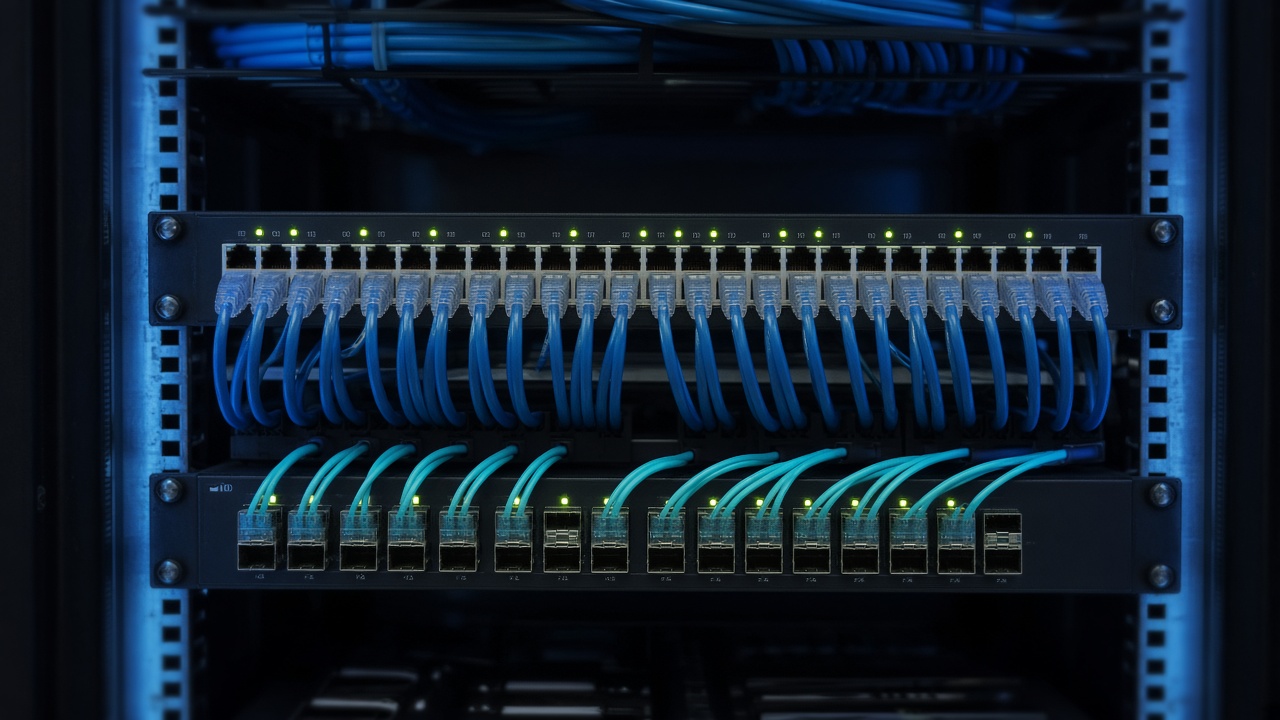
Enterprise Campus Networking
The campus network that may connect users to the compute environment.
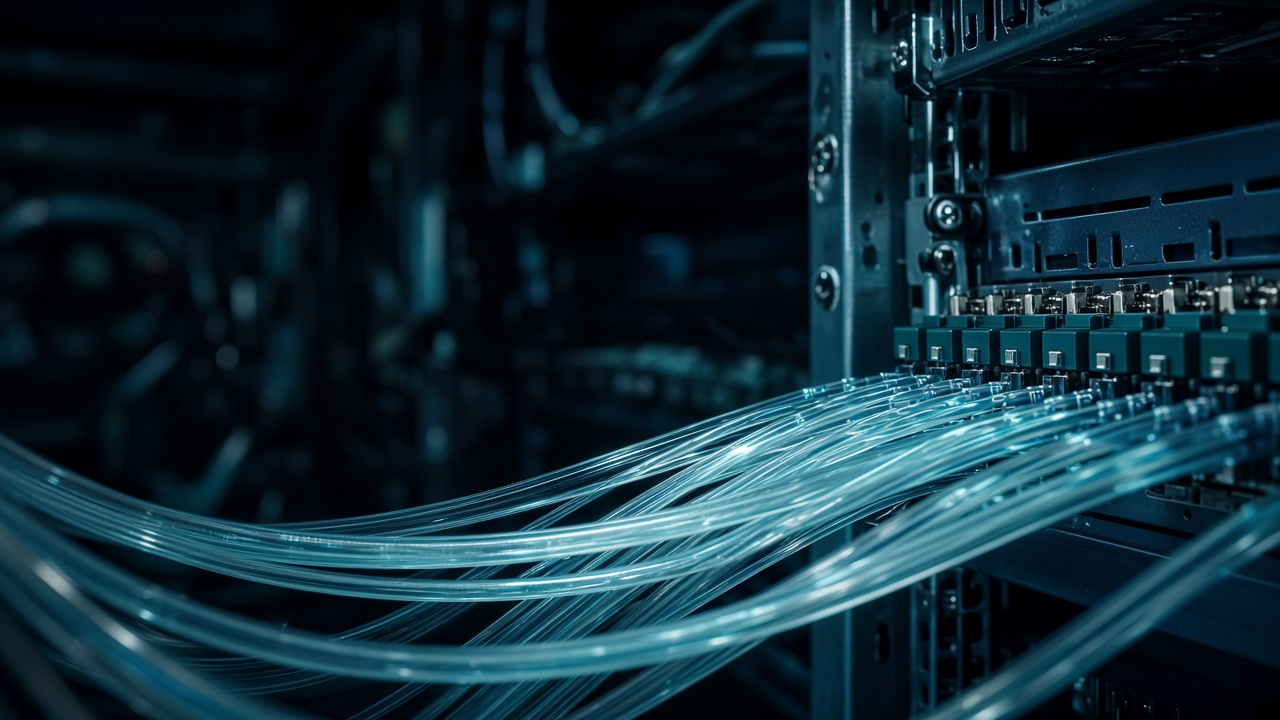
Fiber Optic Transport
Optical paths used when cluster links leave the rack.
Software reading, not fabric references: What is RAG?, What is an AI Agent?, and RAG vs Fine-Tuning. Those notes describe software workflows. They are not references for InfiniBand, RoCEv2, or GPU fabrics.
PLAN YOUR COMPUTE INFRASTRUCTURE
Ready to Design Your AI & HPC Network?
Share your compute-node specifications, network requirements, existing equipment list or preliminary cluster design with Novatelia for technical review.
Opening the RFQ page keeps a browser draft. It does not submit a quotation or issue a reference.