

Transport, Ports & Logistics Hubs
IND-06 · LOGISTICS CONNECTIVITY
Engineering Connectivity Across Ports, Warehouses and Logistics Environments
High-density warehouse Wi-Fi, port terminal outdoor wireless, and long-range perimeter CCTV.
Warehouse Wi-Fi, outdoor port wireless, and perimeter video are the three source pillars. They are sector architecture considerations, not customer project references and not a port-authority approval.
Explore the Infrastructure of a Connected Logistics Hub
Local access, fiber backbones, and approved systems are related conceptually. No port measurement, device count, RF map, or live gate event is shown.
Conceptual logistics infrastructure — not an actual port design, measured RF survey or connected customer system.
01
Port Terminal Core
Aggregation and approved communications for the site.
02
Container Yard Wireless
Outdoor RF, metal obstruction, and a layout that changes.
03
Warehouse Access Network
Indoor wireless and switching for approved devices.
04
Forklift & Handheld Terminals
Mobile endpoints and roaming dependencies. Seamless handover is not promised.
05
Fiber Backbone
Optical links between yards, cabinets, and core rooms. Distance needs a budget.
06
Outdoor Communications Cabinets
Enclosure, power, and uplink. A photo is not an environmental certificate.
07
Gate & Operational Interfaces
Connectivity for approved gate-related systems. Not gate-control authority.
08
Perimeter CCTV
Camera, uplink, recorder, storage, and an authorized viewer.
09
Security & Management Boundaries
Access, isolation, logging, and management connectivity that the design allows.
Three Engineering Challenges in Port & Logistics Connectivity
01
Overcoming metal container stacking and RF reflection in large logistics yards
Metal stacks obstruct and reflect radio energy, and they move. Mounting, environment, and a site-specific check matter. Not every propagation problem can be removed. No heatmap is presented as a measurement.
02
Seamless roaming for forklift-mounted barcode scanners and handheld terminals
Forklift terminals and handheld scanners roam only as well as the client, the RF design, authentication, and the application allow. The source asks for seamless roaming. Zero interruption is not promised.
03
Perimeter surveillance integration across expansive coastal port terminals
Perimeter video needs placement objectives, outdoor cabling, fiber or PoE where appropriate, a recorder, storage, and a test. Analytics, continuous monitoring, and complete coverage are not assumed.
How Container Geometry Changes Outdoor Wireless Design
Three educational conditions. The paths are illustrative, not RF modeling results, and they contain no signal-strength values.
01
Open logistics yard
Fewer obstructions. Distance, mounting height, and client type still dominate.
02
Dense container stacks
Metal blocks and reflects. A stack plan from last month may be wrong today.
03
Mobile terminal movement
Scanners and vehicles cross cell boundaries. Roaming is a test, not a guarantee.
Wireless Infrastructure for Moving Warehouse Operations
Racking, aisles, handheld scanners, forklift terminals, controller architecture, client compatibility, and roaming are the connectivity topics. No throughput, population, or scan-success rate is invented.
This section does not modify warehouse-management software.
Connecting Outdoor Terminal Zones and Remote Field Equipment
Outdoor radios, enclosures, mounting, power, surge protection where required, and fiber or copper uplinks are design inputs. A device is not called corrosion-resistant or IP-rated without that model’s documentation.
Uninterrupted outdoor coverage is not promised.
Fiber Connectivity Across Large Logistics Facilities
A conceptual path is remote zone, edge cabinet, optical uplink, distribution or core, then an approved application. Fiber type, link budget, route, patching, splicing, testing, and documentation are the decisions. No length or loss figure is invented.
From Outdoor Camera to Recording Infrastructure
Camera, network or PoE, fiber or copper uplink, NVR or VMS, storage, then an authorized viewer. Placement, outdoor suitability, capacity, retention, access control, and acceptance are separate questions.
A camera installed does not mean the area is covered. Online does not prove recording. Recording does not prove retention. Infrastructure does not mean a staffed 24/7 service. No analytics accuracy or patrol service is claimed.
Separating Operational Systems, Management and Guest Access
Operational terminals, staff devices, gate interfaces, CCTV, administration, management, and remote users can be separate domains. A public network is not given a path to operational control. No real port addressing is published.
Cybersecurity Considerations for Transport & Logistics Infrastructure
These names are project topics. They are not a sector certification, a clearance, or a managed SOC. None is deployed by default.
01
Rugged Endpoint Security on Industrial Tablets
Endpoint tools on rugged tablets need manufacturer support. It is not a sector certification, a clearance, or a managed SOC.
02
Remote-Site Network Security & Tunneling
Remote-site tunnels are approved paths, not always-on access. It is not a sector certification, a clearance, or a managed SOC.
03
Centralized Event Logging across Gate Systems
Gate-system logs are collected only from systems in scope. They are not gate control. It is not a sector certification, a clearance, or a managed SOC.
04
Secure Role-Based Access for Logistics Staff
Role-based access follows the identity store the site uses. It is not a sector certification, a clearance, or a managed SOC.
05
Device Management across Mobile Scanners
Scanner management applies to devices the platform can enroll. It is not a sector certification, a clearance, or a managed SOC.
06
Warehouse and Port Branch Network Isolation
Warehouse and port networks can be isolated from each other and from administration. Isolation is a design, not a SOC. It is not a sector certification, a clearance, or a managed SOC.
Port Security Frameworks and Operational Requirements
- ISPS Code (International Ship and Port Facility Security Code)
- Oman Port Authorities operational safety standards (Sohar & Duqm)
The ISPS Code is a maritime security framework for ships and applicable port facilities. It does not certify networking or CCTV. Sohar and Duqm are geographic references. Duties belong to the current port or operator document. No ISPS certificate, port approval, contractor registration, clearance, or operational command is claimed.
Installation Methods That Support Distributed Port Infrastructure
Racks, mounting, cabling, labeling, power coordination, environmental protection, fiber, and documentation are physical topics. TIA-606-C is context for labeling practice. It is not a claim of certified compliance.
Civil works, port electrical systems, and machinery installation are not implied.
Validate the Connection, the Mobility and the Recording Path
Seven stages. Each one needs a criterion and an observed result. No fictional pass is issued.
01
Installed
The hardware is in the place the design named.
02
Connected
The link is up. That is not the whole test.
03
Link verified
The agreed optical or copper check, if one was specified.
04
Wireless and mobility evaluated
Association and roaming under the conditions in the scope.
05
CCTV and recording evaluated
Image, recording, and playback are separate checks.
06
Exceptions resolved or retested
An open exception stays visible.
07
Accepted and handed over
Only with records. This page does not sign acceptance.
Related Network and Cybersecurity Architectures
Two related architectures. Unsupported zero-downtime wording is not copied from destination summaries.
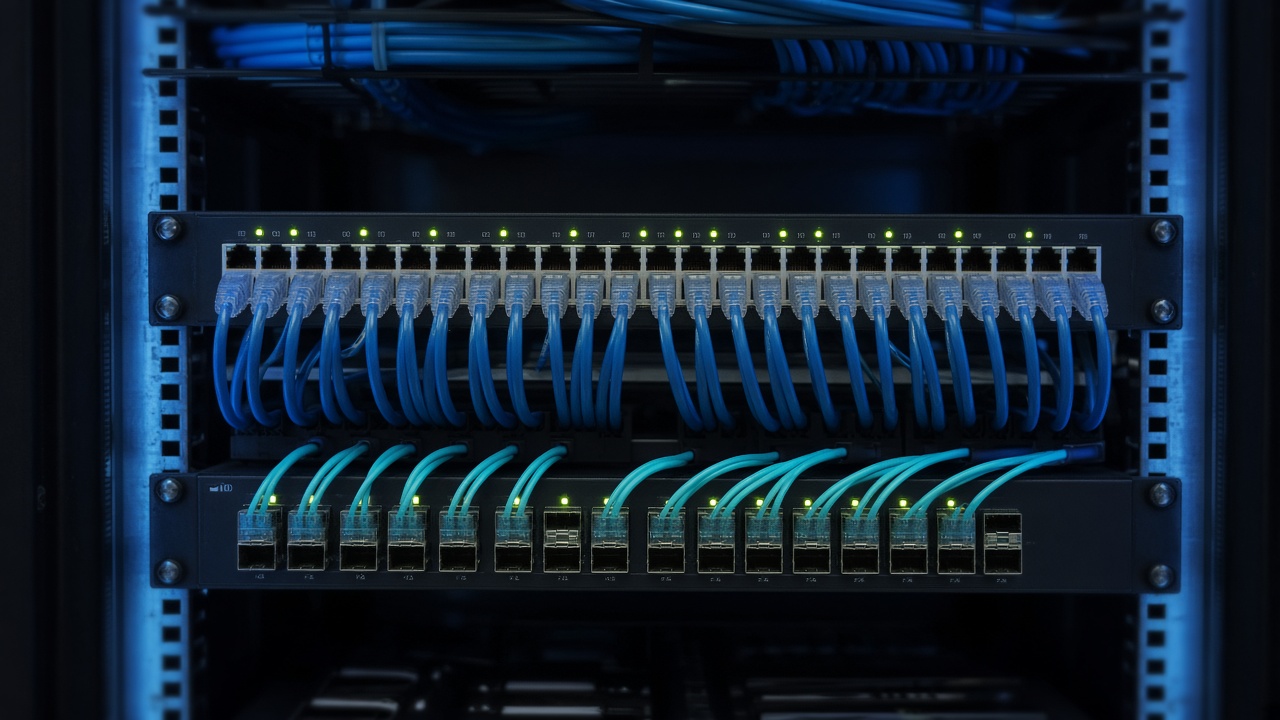
Enterprise Campus Networking
LAN, WLAN, and distributed connectivity as a reference, adapted to yards and warehouses.
Enterprise Campus Networking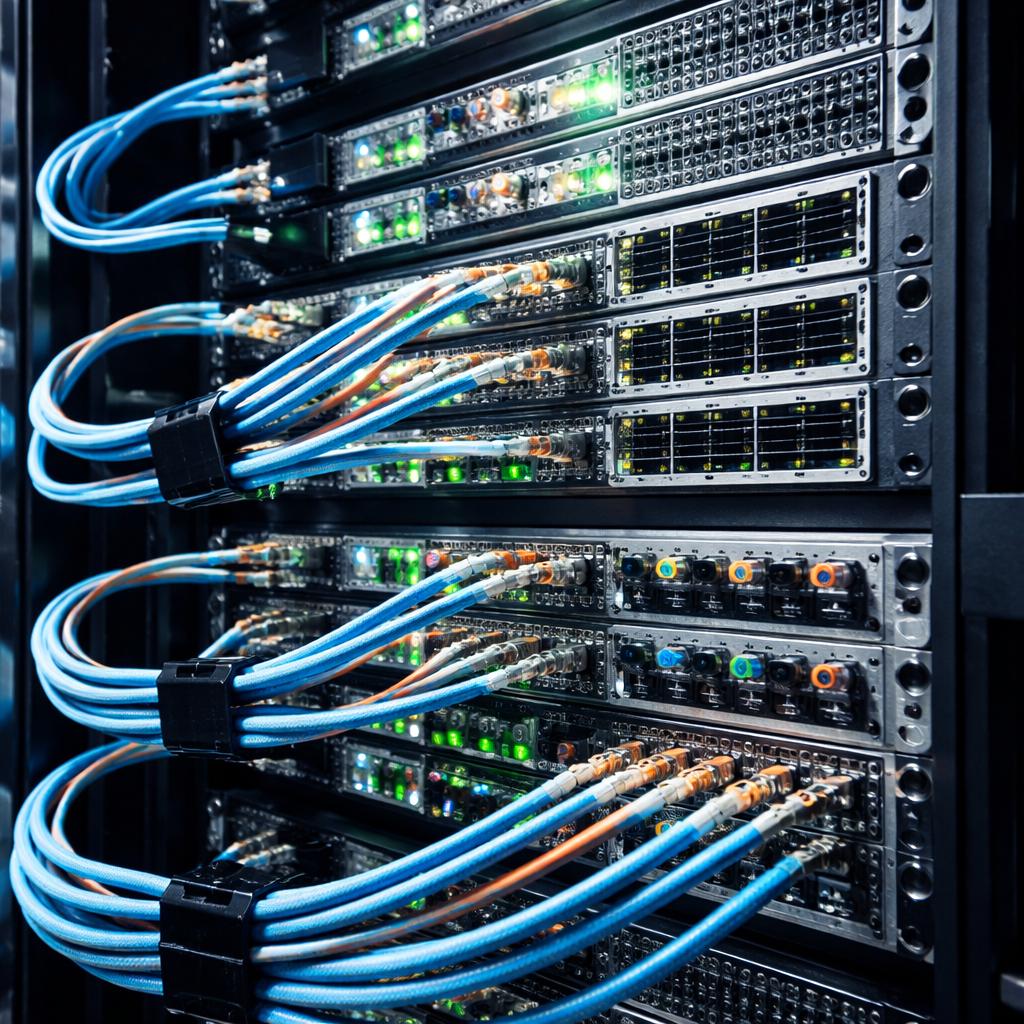
Cybersecurity & Security Infrastructure
Segmentation, endpoint protection where supported, and logging architecture.
Cybersecurity & Security Infrastructure
Engineering Services Supporting Logistics Infrastructure
Installation, cabling, and surveillance integration stay distinct. Each is scope-dependent.

IT Infrastructure Professional Installation
Physical installation of approved equipment.
IT Infrastructure Professional Installation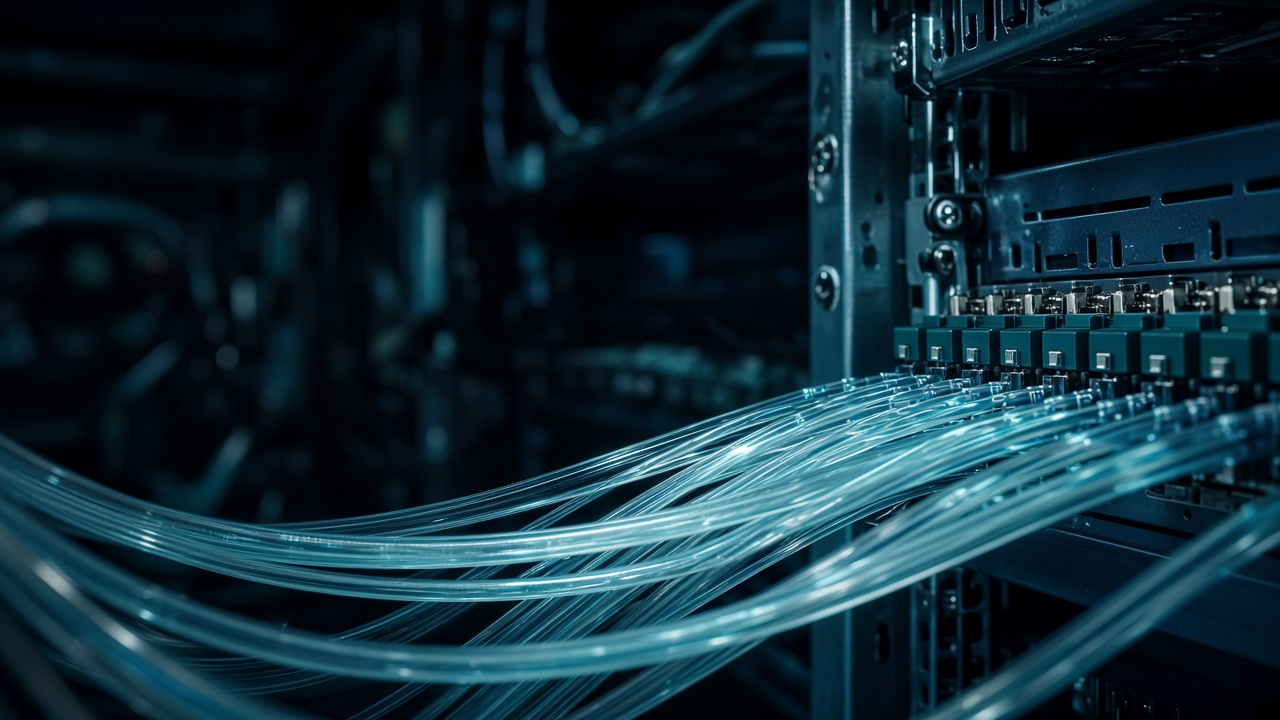
Fiber Optic & Structured Cabling
The cabling scope. Specialist fiber detail stays on that service page.
Fiber Optic & Structured Cabling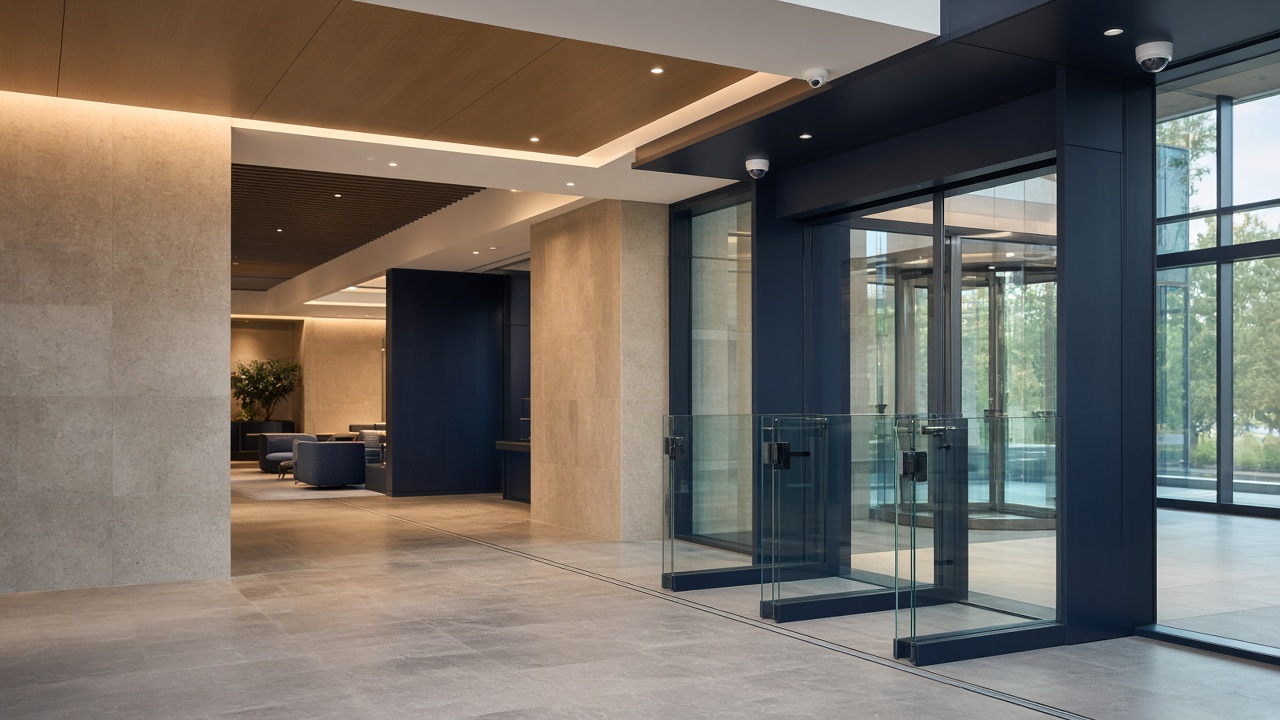
CCTV & Video Surveillance Installation
Camera and recording infrastructure. Not a monitoring contract.
CCTV & Video Surveillance Installation
Engineering Records for Maintainable Logistics Infrastructure
Possible records include topology, equipment schedules, wireless assumptions, survey results if a survey was done, fiber routes, labeling, a camera schedule, tests, exceptions, as-built notes, and a handover list.
Customer site plans, blind spots, credentials, and access-control records are not published.
From Site Conditions to a Defined Connectivity Blueprint
Six educational stages. They are not a mandatory formal process and they do not imply a finished port project.
01
Review the port or warehouse operating environment
Yards, buildings, and how vehicles move.
02
Identify devices, mobility and service requirements
Scanners, vehicles, and cameras the operator actually uses.
03
Map RF, fiber and network dependencies
Without pretending a sketch is a survey.
04
Define segmentation and surveillance boundaries
Who may view, and which network may carry it.
05
Establish validation criteria
Before any acceptance language.
06
Document handover and support considerations
Only the records in the scope.
Transport, Ports & Logistics Network Infrastructure — Questions and Answers
01What is port telecommunications infrastructure?
It is the outdoor wireless, warehouse Wi-Fi, fiber, and camera connectivity a terminal or logistics site may need. It is not a port operating system.
02What network systems are commonly needed in a container terminal?
A core, yard wireless, warehouse access, fiber to remote cabinets, and a path for approved cameras or gate interfaces. The mix depends on the site.
03Why do metal containers affect outdoor Wi-Fi?
Steel blocks and reflects radio energy, and stacks change. A design has to be checked on the yard. Not every reflection problem can be removed.
04How does multipath influence wireless performance?
Reflected copies of a signal arrive at different times and can distort reception. Antenna choice and placement respond to that. This page does not publish signal-strength numbers.
05How should large logistics yards be evaluated for Wi-Fi?
With the real container layout, mounting options, client types, and a site survey method the scope names. Drawings here are illustrative, not RF models.
06What networking considerations affect forklift-mounted terminals?
Roaming, vehicle speed, the client radio, authentication, and how the application behaves during a handoff.
07What does roaming mean for warehouse barcode scanners?
It is the client moving between access points without the application failing. Success depends on the device and the RF design. It is not guaranteed.
08Can seamless roaming be guaranteed?
No. The source asks for seamless roaming. Interruption-free mobility is a test outcome, not a promise.
09What infrastructure supports handheld logistics devices?
An SSID or port on the operational network, power and coverage where people actually walk, and an authentication method the device supports.
10How does warehouse Wi-Fi differ from office Wi-Fi?
Aisles, racking, metal, and moving clients dominate. Office channel plans are a weak starting point. This page does not change any warehouse-management application.
11When is outdoor wireless appropriate in a port?
When the zone cannot be cabled to every client and the radio, enclosure, and mounting fit the environment. A catalog photo is not an IP rating for a named model.
12How are remote port cabinets connected?
Usually by fiber to a distribution or core point, with local power and an enclosure suited to the coast. Reach still needs a link budget.
13Why is fiber useful across large logistics facilities?
Distance and electrical separation are easier on fiber than on copper. The fiber type and the optic still have to be specified. No length is invented here.
14What is required before specifying optical link distances?
The route, the fiber specification, connector and splice counts, and the optic’s power budget.
15How are perimeter cameras connected to central recording?
Camera, then network or PoE, then a fiber or copper uplink, then an NVR or VMS, then storage, then an authorized viewer.
16Does installing a CCTV camera guarantee coverage?
No. A mounted camera does not mean the area is covered. A camera that is online does not prove it is recording, and recording does not prove retention is long enough.
17What is the relationship between NVR/VMS and video storage?
The recorder or video platform writes to storage. Capacity and retention are design inputs. This page does not provide a staffed 24/7 viewing service.
18How are warehouse and port networks segmented?
Operational terminals, staff devices, cameras, gate interfaces, and management can use separate policies. A public network is not given a path to operational control.
19Can industrial tablets use endpoint security tools?
Only when the manufacturer supports that agent. Rugged hardware is not a reason to install software the vendor forbids.
20What is the ISPS Code?
The ISPS Code is part of international maritime security arrangements for ships and applicable port facilities. It is not a certification of a Wi-Fi or CCTV design.
21Does the ISPS Code certify telecommunications infrastructure?
No. It does not certify networking, CCTV, or Novatelia.
22What technical requirements may apply at Sohar and Duqm?
Sohar and Duqm are geographic references from the source. Specific duties belong to the port or operator document in force. This page does not claim access rights or an approval at either port.
23Does Novatelia claim port authority approval?
No. There is no port-authority approval, contractor registration, or security clearance on this page.
24What tests are relevant to warehouse wireless acceptance?
Association, authentication, and roaming under the conditions the scope names, plus the uplink those clients use. A pass needs observed results.
25What evidence supports CCTV integration acceptance?
A live image, a recording, a playback check, and the retention assumption written down. Each one is separate evidence.
26Which Novatelia services support port infrastructure?
Professional installation, fiber and structured cabling, and CCTV installation. They stay separate scopes. Cabling standards such as TIA-606-C are context, not a certification that labeling was audited.
27How can a logistics operator request infrastructure scoping?
Open the RFQ draft or contact Novatelia. Opening the RFQ page keeps a browser draft. It does not submit a quotation or issue a reference. Do not send restricted port drawings.
Plan Connectivity for Ports, Warehouses and Logistics Operations
The RFQ page keeps a browser draft. It does not submit a quotation or issue a reference.
Opening the RFQ page keeps a browser draft. It does not submit a quotation or issue a reference. Do not send live security configurations or restricted drawings.