

Healthcare & Medical Centers
IND-03 · HEALTHCARE INFRASTRUCTURE
Connectivity Infrastructure Designed Around Clinical Requirements
Continuous connectivity for PACS medical imaging, mobile telemetry, and patient IoT isolation.
Imaging networks, hospital campus connectivity, clinical and non-clinical boundaries, wireless, storage, and operational availability are infrastructure questions. Novatelia supplies an infrastructure perspective, not clinical engineering authority. Continuous connectivity in the source summary is an intent, not a guaranteed clinical uptime.
Explore the Connected Healthcare Environment
Imaging modality to an approved path to a PACS, VNA, or other platform, then an authorized viewer. A clinical device uses an approved segment. Guest Wi-Fi stays on a guest path. Guests are not routed into clinical systems. Not every medical device is on Ethernet or Wi-Fi.
Conceptual healthcare infrastructure — not a customer hospital design or clinically validated system.
01
Medical Imaging & PACS
Modalities, PACS, relevant DICOM connectivity, and storage paths. PACS and VNA are not treated as the same product.
02
Clinical Network
Connectivity for approved clinical devices and hospital applications. A VLAN is not authority over life-support systems.
03
Biomedical / Medical IoT
Visibility and approved pathways. Devices are not assumed to accept generic IP management.
04
Clinical Wireless
Wireless for approved clinical uses after coverage and coexistence work, including biomedical coordination.
05
Staff IT & Workstations
Authorized staff endpoints and hospital information systems. These are not the same as manufacturer-controlled medical equipment.
06
Patient & Guest Network
Separately governed guest connectivity toward an authorized internet path only.
07
Hospital Core & Data Infrastructure
Core connectivity, storage, and data-center dependencies. A spine-and-leaf fabric is not assumed for every hospital.
08
Security & Administration
Access governance, logging, segmentation, and approved security controls. No patient record is shown.
Three Infrastructure Challenges That Shape Healthcare Architecture
01
High-bandwidth transfer requirements for uncompressed DICOM medical images
DICOM is an imaging information standard. Transfer demand depends on modality, file size, and the archive. The source mentions uncompressed images. That is not true of every study. No bandwidth, study count, or storage capacity is invented.
02
Strict isolation between clinical life-support VLANs and patient guest Wi-Fi
Clinical and guest networks should be separated. Identity, policy, and device constraints matter. A VLAN alone is not sufficient isolation, and life-support devices are not placed into an administrative VLAN without a hospital-approved design.
03
Zero radio interference with sensitive medical diagnostics hardware
Wireless near medical equipment needs an RF assessment, manufacturer limits, and biomedical engineering. IEC 60601-1-2 is about equipment electromagnetic compatibility. Zero radio interference is historical wording and is not published as a guarantee.
From Diagnostic Imaging to Authorized Clinical Access
A conceptual path is modality, imaging network, PACS or VNA, storage, then an authorized viewer. DICOM connectivity, study transfer, archive availability, and any WAN hop are dependencies. This explains infrastructure, not radiological diagnosis.
No imaging speed, study count, storage size, DICOM conformance, or clinical certification is claimed.
Separate Clinical Connectivity from Guest Access
Conceptual domains include clinical applications, biomedical devices, hospital administration, staff access, patient or guest Wi-Fi, and management. Separation may use segmentation, firewall policy, identity, routing boundaries, and device-specific limits.
VLAN separation alone does not guarantee security. No real patient-network topology is published.
Wireless Planning for Sensitive Clinical Environments
Factors are illustrative. Nothing here is a measured hospital survey. Biomedical engineering coordination is required before wireless is placed near sensitive equipment. Wi-Fi 6E or 7 is relevant only where devices and Oman frequency rules allow it.
01
Coverage and density
Where staff and approved devices actually work, and how many associate at once.
02
Interference sources
Building materials, other radios, and equipment the manufacturer restricts.
03
Bands and placement
Channel and mounting choices follow the survey method in the scope.
04
Roaming
Moving clinical devices need a client that can roam. The outcome is tested, not promised.
Managing Connectivity Across Medical and Supporting Devices
Inventories, interface types, vendor-approved communication, visibility, logging where supported, and lifecycle limits are the infrastructure topics.
Novatelia does not configure, modify, or certify arbitrary clinical devices, and this page has no device-control function.
Infrastructure Foundations for Healthcare Applications
Enterprise switching, routing, optical links, storage networking, and management boundaries support hospital applications. A campus network and a data-center fabric are different designs.
Not every hospital needs spine-and-leaf. There is no universal zero-downtime claim.
Plan for Availability. Verify the Actual Dependencies.
Power, fault domains, uplinks, servers, storage, maintenance windows, and application continuity all sit under a clinical service. A redundant network drawing is not proof of clinical availability.
No recovery-time number and no uptime percentage is published.
Cybersecurity Considerations for Healthcare Infrastructure
These names are project topics. They are not a sector certification, a clearance, or a managed SOC. None is deployed by default.
01
Endpoint Protection & Medical Workstation Hardening
General IT endpoints and manufacturer-controlled medical equipment are hardened differently. It is not a sector certification, a clearance, or a managed SOC.
02
Network Segmentation for Biomedical Devices
Biomedical segmentation follows the device vendor and the hospital design. It is not a sector certification, a clearance, or a managed SOC.
03
Identity & Access Governance
Identity governance covers administrative and clinical application access that the identity system can actually control. It is not a sector certification, a clearance, or a managed SOC.
04
Centralized Access Logging
Access logging stays inside supported systems and privacy limits. It is not a sector certification, a clearance, or a managed SOC.
05
Ransomware Resilience & Immutable Backups
Immutable backups are a concept. They are not assumed to be installed, and recovery is not guaranteed. It is not a sector certification, a clearance, or a managed SOC.
06
Asset Visibility across Medical IoT
Medical IoT visibility is an inventory topic, not remote clinical control. It is not a sector certification, a clearance, or a managed SOC.
07
Patch Governance with Staged Validation
Patches on clinical workstations may need vendor approval and a clinical schedule. It is not a sector certification, a clearance, or a managed SOC.
Healthcare Data Governance and Electromagnetic Compatibility
- Ministry of Health (MOH) medical records data protection guidelines
- IEC 60601-1-2 medical electrical equipment electromagnetic compatibility
Ministry of Health medical-records guidance and IEC 60601-1-2 are preserved as references. Handling health information may involve Oman law, ministry requirements, and hospital policy. IEC 60601-1-2 does not certify hospital Wi-Fi, enterprise networking, Novatelia, or a finished project. No MOH certificate is claimed. This is not a sector certification.
Related Network and Data Center Solution Architectures
Two related architectures. Zero-downtime wording from other pages is not repeated.
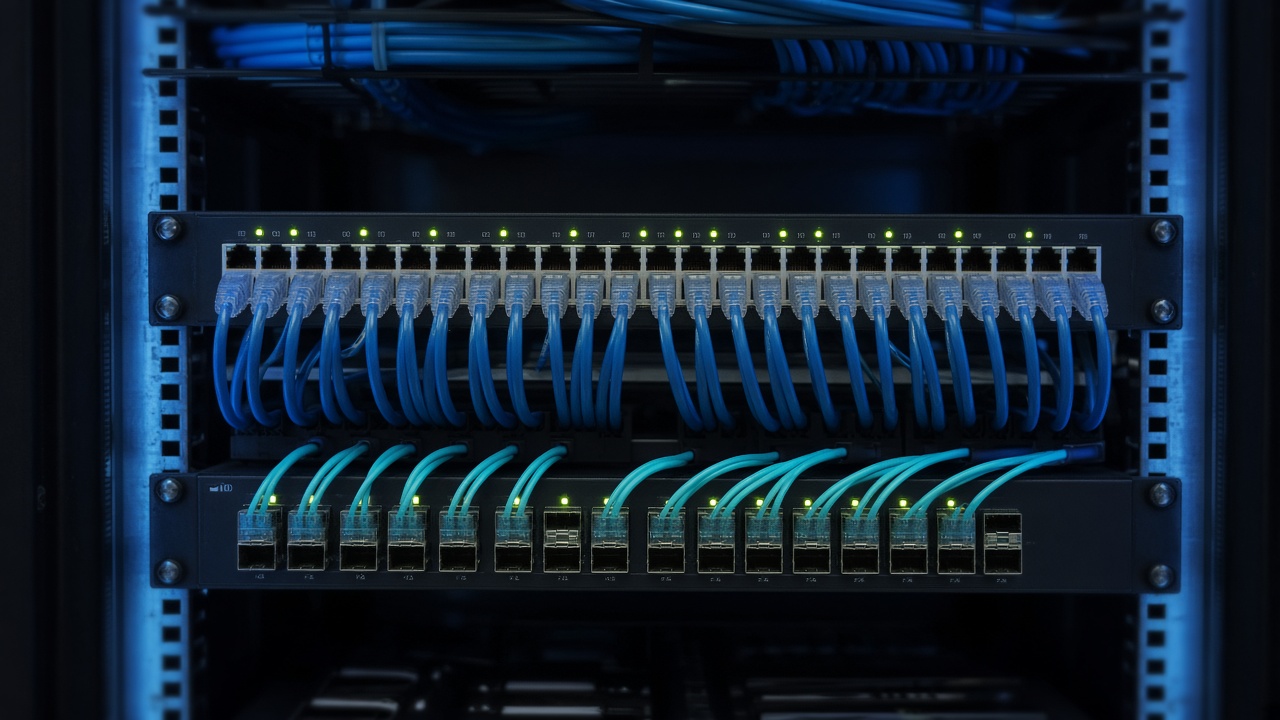
Enterprise Campus Networking
Campus switching and wireless as a design reference for hospital buildings.
Enterprise Campus Networking
Data Center Infrastructure & Fabrics
Server, storage, and optical connectivity when the hospital uses a data hall. The fabric type is not universal.
Data Center Infrastructure & Fabrics
Engineering Services Supporting Healthcare Projects
Design plans the architecture. Maintenance covers only what the contract names. Response hours and spares are not invented. There is no universal zero-single-point-of-failure statement.

Network & Infrastructure Design
Requirements and an approved network design.
Network & Infrastructure Design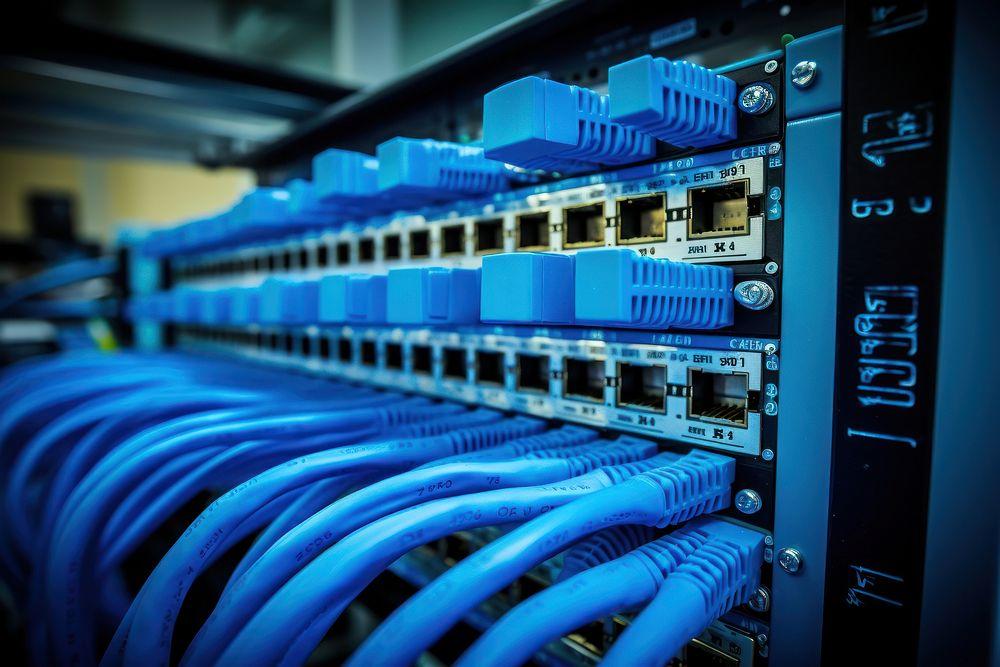
Infrastructure Maintenance Agreements & SLA
Contract-specific coverage. Emergency dispatch is not assumed.
Infrastructure Maintenance Agreements & SLA
From Clinical Connectivity Requirements to an Approved Technical Scope
Six educational stages. They do not imply a completed hospital project or clinical acceptance.
01
Understand clinical and operational requirements
From the hospital, not from a generic template.
02
Review medical and supporting device connectivity
Only vendor-approved interfaces.
03
Map network, wireless and application dependencies
Imaging, identity, and storage included only if they are in scope.
04
Evaluate security segmentation and resilience
As a design review, not a clinical certification.
05
Define technical scope and validation criteria
Criteria come before any claim of acceptance.
06
Plan appropriate handover and maintenance
Maintenance follows the signed agreement.
Healthcare & Medical Center Infrastructure — Questions and Answers
01What is healthcare network infrastructure?
It is the campus, wireless, imaging, and security connectivity a hospital or clinic depends on. Novatelia describes infrastructure requirements and does not take clinical engineering authority.
02What network requirements affect PACS?
Study size, how often studies move, storage, and the path from the modality to the imaging platform. There is no universal bandwidth number on this page.
03What is DICOM?
DICOM is the imaging information standard used to exchange medical images and related data. Using the word does not claim DICOM conformance for a network.
04Are all DICOM images uncompressed?
No. The source mentions uncompressed images as a demanding case. Many studies are compressed. The requirement depends on the modality and the archive.
05How are medical imaging systems connected?
A modality uses an approved network path to a PACS, VNA, or other imaging platform, and authorized viewers read from that platform. PACS and VNA are not interchangeable names.
06What is clinical network segmentation?
It is the separation of clinical systems, biomedical devices, staff IT, and guest access according to the hospital’s design. A VLAN label is not enough for every safety-sensitive device.
07Why should guest Wi-Fi be separated from clinical systems?
Visitor devices are untrusted. Their path should reach the internet the hospital allows, not clinical applications or device-management planes.
08Is VLAN separation sufficient for medical device security?
No. Isolation also depends on routing, firewall policy, identity, and the device vendor’s own constraints.
09How are connected biomedical devices managed?
Through an inventory, vendor-approved interfaces, and access rules the hospital accepts. Novatelia does not configure or certify arbitrary clinical devices.
10Can hospital Wi-Fi interfere with medical equipment?
It can, which is why placement, channels, and the equipment manufacturer’s limits need a biomedical review. This page does not publish a measured hospital survey.
11Does Novatelia guarantee zero RF interference?
No. Zero radio interference is historical source wording. It is not a promise of interference-free operation.
12What is IEC 60601-1-2?
IEC 60601-1-2 covers electromagnetic disturbances and compatibility requirements for medical electrical equipment and systems.
13Does IEC 60601-1-2 certify hospital networks?
No. It does not certify hospital Wi-Fi, enterprise networking, Novatelia’s services, or a finished hospital project.
14What are healthcare network availability requirements?
They come from the clinical service and the applications it uses. Redundant paths are a design topic. They are not proof of uninterrupted clinical connectivity.
15Are ransomware backup strategies relevant to hospitals?
Backups and immutable copies can be relevant where the platforms support them. Installing that language here does not mean immutable storage is already in place or that recovery is guaranteed.
16How should medical workstation patches be governed?
With vendor guidance, a risk review, and a clinical schedule. A general IT patch policy is not automatically safe for manufacturer-controlled equipment.
17What is Medical IoT asset visibility?
It is knowing which connected medical and supporting devices are on the network, within the limits of what those devices reveal. It is not remote control of the device.
18What Oman healthcare data protection considerations may apply?
Medical records may fall under Oman law, Ministry of Health expectations, and the hospital’s own policy. This page does not invent an MOH certificate.
19Which Novatelia solutions relate to healthcare infrastructure?
Enterprise campus networking, for switching and wireless, and data center infrastructure, for server and storage connectivity. Neither is automatically the whole hospital design.
20Does this page certify hospital regulatory compliance?
No. It is not a sector certification, a medical-device approval, or a regulatory endorsement.
21How can a healthcare organization request an infrastructure assessment?
Open the RFQ draft or contact Novatelia. Opening the RFQ page keeps a browser draft. It does not submit a quotation or issue a reference.
Plan Healthcare Connectivity Around Verified Clinical Requirements
The RFQ page keeps a browser draft. It does not submit a quotation or issue a reference.
Opening the RFQ page keeps a browser draft. It does not submit a quotation or issue a reference. No patient data is collected, and emergency clinical support is not activated.