

Oil, Gas & Energy Infrastructure
IND-04 · INDUSTRIAL & ENERGY CONNECTIVITY
Engineering Connectivity for Demanding Industrial Environments
Hardened industrial Ethernet, long-distance pipeline optical links, and SCADA network segmentation.
Industrial Ethernet, fiber transport, remote facilities, SCADA connectivity, OT boundaries, environment, and handover belong in one requirements picture. This is an industry blueprint, not a completed customer project, and not a PDO case study.
Explore the Connected Energy Infrastructure Environment
A conceptual path is field equipment, an approved controller or RTU, an industrial network, a transport backbone, and an authorized OT or SCADA environment. Not all control traffic is IP. Industrial systems are not assumed to face the public internet. No control link is drawn from a public network to a safety system.
Conceptual industrial network architecture — not a customer site design or connected SCADA system.
01
Central Operations / OT Systems
Authorized operations systems and supervisory connectivity. This page does not operate them.
02
SCADA Communication Environment
Communications between approved supervisory systems and the remote assets those systems already use.
03
Industrial Ethernet
Ruggedized switching, interfaces, and topology chosen for the site environment. Ratings are per model.
04
Remote Field Sites
Cabinets, communications equipment, power, and weather. No Novatelia pipeline or substation contract is claimed.
05
Optical Backbone
Fiber among approved facilities. Reach comes from a link budget, not from the word single-mode.
06
Remote Terminal / Control Interfaces
Conceptual interfaces to RTUs, PLCs, or other selected equipment. No control command is offered.
07
IT/OT Security Boundary
Segmentation, policy, and a controlled management path. The Purdue model is a reference, not a compliance badge.
08
Engineering Testing & Handover
Optical tests, network checks, and documentation named in the scope. No fabricated trace.
Three Engineering Challenges That Define Energy Infrastructure
01
High ambient desert temperatures (-10°C to +70°C) requiring fanless industrial hardware
The source names −10°C to +70°C and fanless hardware. Selection follows the site specification and the manufacturer rating. Ambient air is not the temperature inside the enclosure. Fanless is not automatic. No hazardous-area approval is claimed.
02
Securing legacy SCADA / Modbus telemetry from external cyber threats
Legacy SCADA and Modbus need segmentation, approved access, and change control. Using Modbus is not proof of a compromise. New security equipment is not dropped into a live OT network without an operator’s risk review. Active scanning is not described as universally safe.
03
Long-distance single-mode fiber runs exceeding 80 kilometers between substations
Runs exceeding 80 km are a source requirement. Reach depends on attenuation, splices, connectors, power budget, the transceiver, dispersion, margin, and the path. An ordinary single-mode optic is not assumed to span 80 km.
Industrial Networking Designed Around Real Environmental Constraints
Relevant choices include ruggedized switches, industrial power, mounting, enclosure temperature, EMI, surge protection where required, and the fiber or copper interfaces the manufacturer supports.
No universal fanless, temperature, or hazardous-area certification is stated. Ratings are verified per model.
How Long-Distance Optical Connectivity Is Evaluated
Remote site A, optical distribution, the fiber route, intermediate infrastructure where required, then remote site B. The elements below are the link-budget conversation. This is not a tested customer link.
Long-distance link feasibility must be established using the actual route, fiber characteristics, optical equipment and verified link budget.
01
Transmit and receive
Transmitter power and receiver sensitivity or overload come from the optic datasheet.
02
Fiber and events
Fiber loss, connectors, and splices are counted. They are not guessed from distance alone.
03
Margin and wavelength
Engineering margin, wavelength, and module type decide whether the path is viable.
04
Dispersion and amplification
Long routes may need dispersion or amplification analysis. That is a design task, not a default part.
Choosing Optical Transport for Distributed Energy Sites
Relevant families include single-mode fiber, optical Ethernet, long-reach optics, CWDM, DWDM, and an aggregation platform when the capacity needs one.
GPON or XGS-PON can appear in a broader portfolio and is not automatically correct for mission-critical OT. Carrier-grade behavior is not promised without a defined design.
Separating Enterprise IT from Industrial Operations
Enterprise IT, OT operations, site industrial networks, zones and conduits, approved interconnections, and controlled remote administration are separate ideas. The Purdue model is conceptual, not a mandatory drawing and not proof of compliance.
Some modern plants do not fit a rigid Purdue sketch. Plant changes stay with the operator.
Protecting Legacy Industrial Communications Without Disrupting Operations
Exposure, visibility, segmentation, approved gateways, authorized management, passive monitoring where appropriate, vendor pathways, and change control are the topics.
This page does not provide an intrusion workflow, does not claim Modbus can simply be encrypted in place, and does not recommend active scanning as a universal step.
Cybersecurity Considerations for OT & Energy Networks
These names are project topics. They are not a sector certification, a clearance, or a managed SOC. None is deployed by default.
01
OT / IT Network Segmentation (Purdue Model)
IT/OT segmentation uses zones and conduits. The Purdue model is a lens, not a certificate. It is not a sector certification, a clearance, or a managed SOC.
02
Industrial Cybersecurity & Protocol Inspection
Protocol inspection depends on a product that understands the traffic and on an operator approval. It is not a sector certification, a clearance, or a managed SOC.
03
Secure Remote Vendor Maintenance
Vendor maintenance uses a governed remote path, not an open tunnel. It is not a sector certification, a clearance, or a managed SOC.
04
Industrial Endpoint Security
Industrial endpoint tools run only where the vendor allows them. It is not a sector certification, a clearance, or a managed SOC.
05
Centralized Syslog & SIEM Telemetry
Syslog or SIEM telemetry is forwarded only from systems approved for it. It is not a 24/7 SOC. It is not a sector certification, a clearance, or a managed SOC.
06
Passive Industrial Asset Visibility
Passive asset visibility listens. It does not scan a live safety system by default. It is not a sector certification, a clearance, or a managed SOC.
07
SCADA Threat Detection
SCADA threat detection is a monitoring topic. It is not integration into the control system and not continuous monitoring by default. It is not a sector certification, a clearance, or a managed SOC.
Infrastructure for Pipelines, Substations and Remote Facilities
Field cabinets, enclosures, optical uplinks, power, industrial switching, access, and designed resilience are the physical topics.
No Novatelia pipeline, PDO site access, substation contract, equipment rating, or guaranteed field response is claimed.
Verify the Optical Path Before Claiming Acceptance
Optical loss and OTDR traces are different evidence. Direction, connector inspection, criteria, measured results, and retests belong in the record.
No fabricated result is shown. RFC 2544 is not a fiber cable certification standard.
Industrial Security Standards and Project-Specific Requirements
- PDO (Petroleum Development Oman) telecommunications technical specifications
- IEC 62443 Industrial Network Security Standard
IEC 62443 is a family of industrial cybersecurity standards. Applying segmentation does not certify a project. PDO telecommunications specifications apply only when the exact document is supplied. No PDO document number, approval, or contractor authorization is invented.
Connectivity Engineering Does Not Transfer Process-Safety Authority
OT changes need plant approval. Safety systems can have separate governance. Hazardous-area rules are equipment- and site-specific. Emergency shutdown and safety instrumented systems belong to their own disciplines.
This page does not claim functional safety, ATEX, IECEx, SIL, hazardous-area installation, PLC, or SIS engineering.
Related Infrastructure Solution Architectures
The general cybersecurity portfolio is not automatically approved for process systems. Industrial fiber is not the same design as subscriber FTTH.
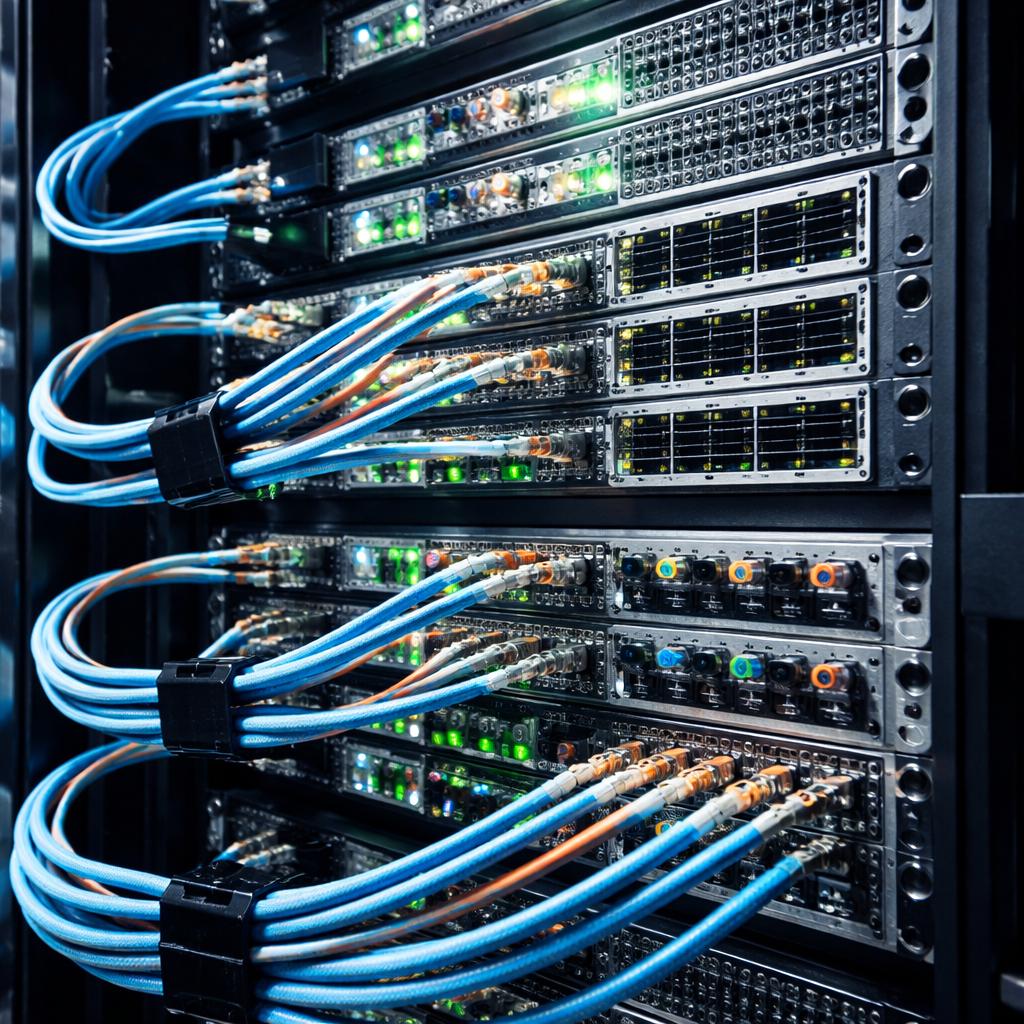
Cybersecurity & Security Infrastructure
Relevant to OT and IT segmentation when that architecture work is scoped.
Cybersecurity & Security Infrastructure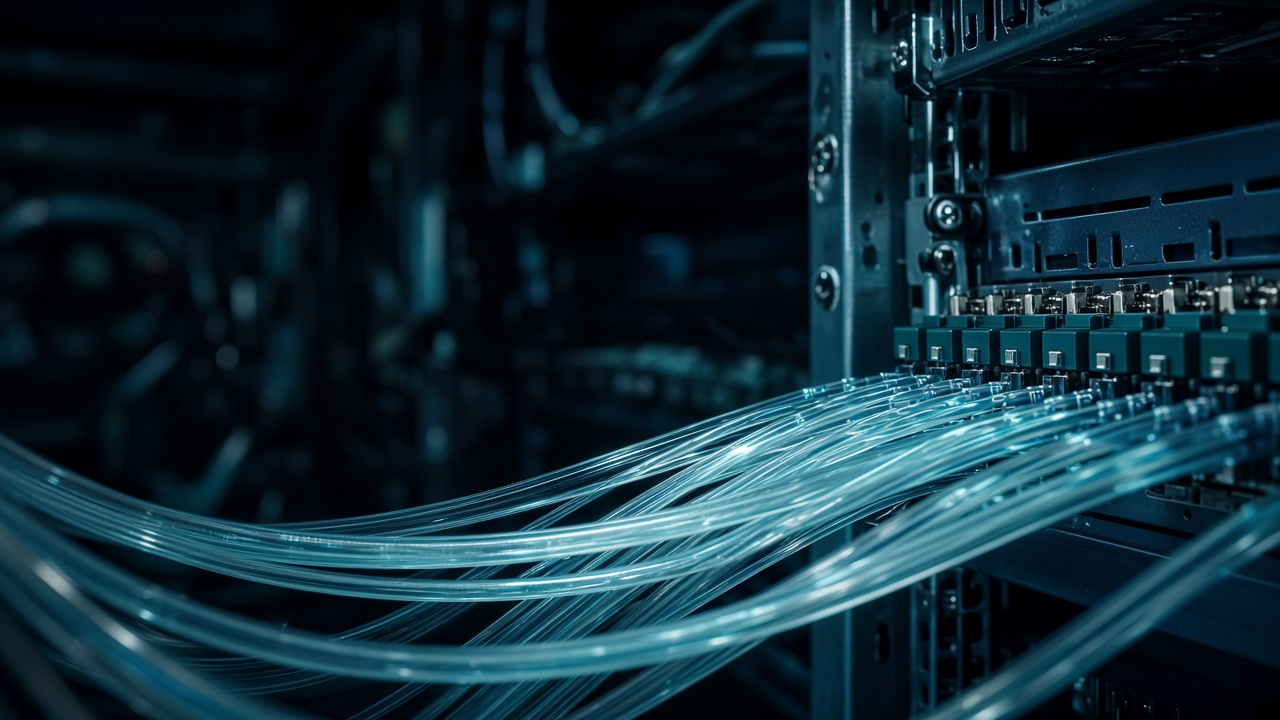
Fiber Optic Transport & FTTH Backbones
Optical transport options. Subscriber access architectures are not assumed for OT links.
Fiber Optic Transport & FTTH Backbones
Engineering Services for Energy Infrastructure Projects
Cabling builds the approved physical path. Testing produces scoped evidence. Technical support is specialist troubleshooting. None of them includes SCADA process-control authority or a 24/7 response claim.
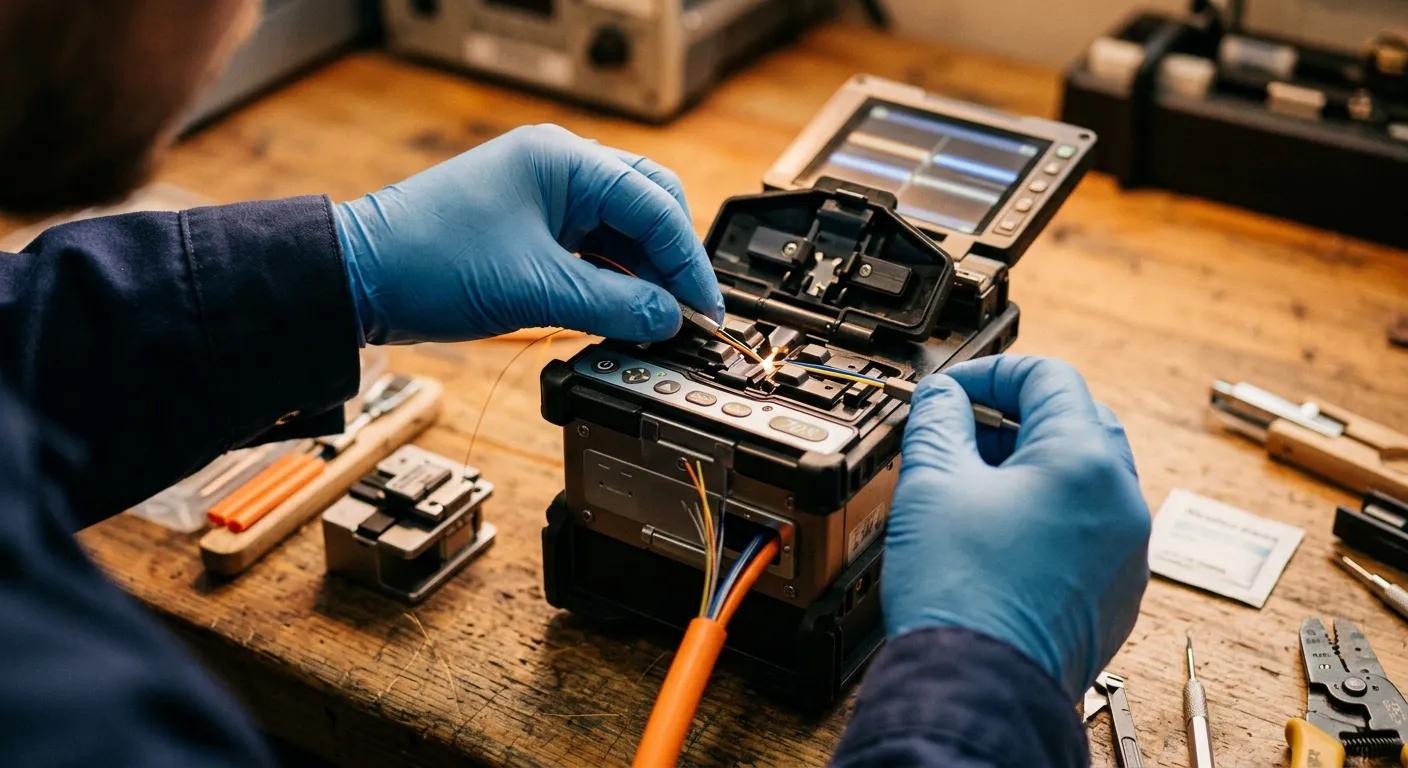
Fiber Optic & Structured Cabling
The physical fiber and copper scope that was approved.
Fiber Optic & Structured Cabling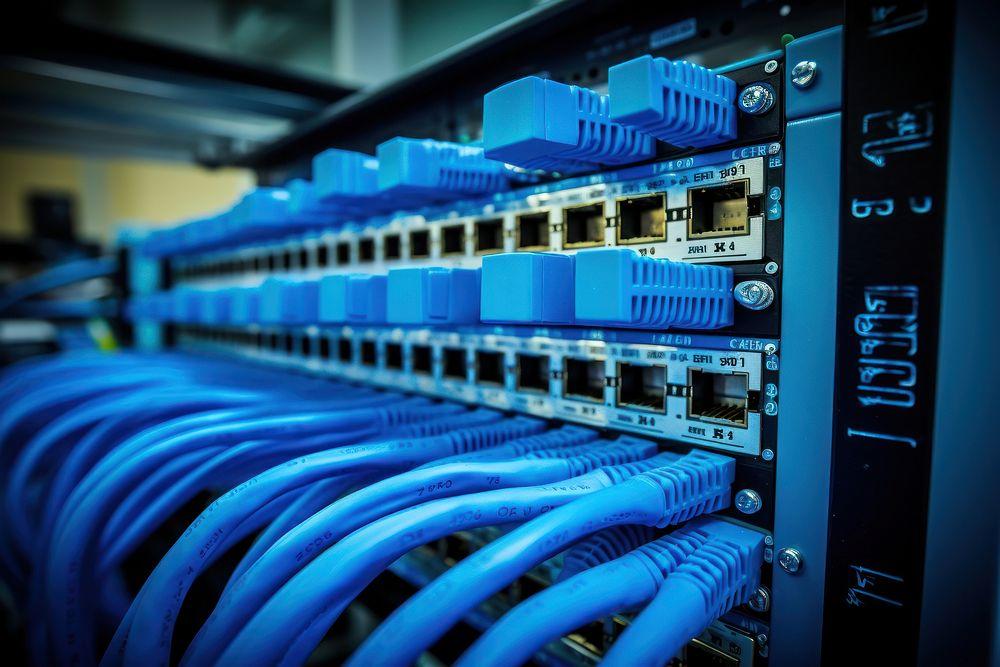
L2 & L3 Network Technical Support
Authorized troubleshooting of network layers. Not process control.
L2 & L3 Network Technical Support
Engineering Evidence That Supports Long-Term Operations
Scope-dependent records can include diagrams, fiber routes, equipment schedules, a link budget, interface notes, test records, approved configuration information, exceptions, and handover documents.
Actual plant maps, configuration files, SCADA addresses, OT inventories, credentials, and security-policy details are not published. No fake signed acceptance is shown.
From Remote-Site Requirements to Verified Network Infrastructure
Six educational stages. They depend on scope and they do not report a client approval.
01
Identify operating conditions
Environment, power, and access constraints from the site.
02
Map connectivity and OT dependencies
Without taking control of the process.
03
Review network and optical architecture
Including a real link budget for long fiber.
04
Define security and authorization boundaries
Zones, conduits, and who may approve a change.
05
Establish testable technical requirements
Criteria before any acceptance language.
06
Document validation and handover
Records named in the scope only.
Oil, Gas & Energy Infrastructure — Questions and Answers
01What is industrial network infrastructure?
It is the switching, fiber, and security design that carries approved industrial and enterprise traffic at a production or energy site. It is not a SCADA product.
02How does industrial Ethernet differ from office networking?
Industrial gear is chosen for the site environment, the interfaces, and the consequence of a change. Office switching assumptions do not transfer to an OT network.
03What environmental conditions affect industrial switches?
Temperature inside the enclosure, dust, power quality, and electromagnetic exposure. Ambient air temperature is not the same number as the temperature at the electronics.
04Is fanless hardware always required in oil and gas sites?
No. Fanless hardware can suit some cabinets. The manufacturer rating and the site specification decide.
05Can industrial networking equipment operate at +70°C?
Only a specific model with a published rating for that condition can. The source range of −10°C to +70°C is a requirement to check, not a universal product claim.
06How is long-distance fiber connectivity designed?
By a link budget: transmitter power, receiver limits, fiber loss, connectors, splices, margin, wavelength, and the route. Distance alone does not choose the optic.
07Can single-mode fiber support connections beyond 80 km?
Sometimes, with the right fiber, optic, and margin. The source mentions runs exceeding 80 km. Ordinary single-mode optics do not automatically reach that far.
08What is an optical link budget?
It is the accounting of optical power from transmitter to receiver, including losses and a margin. Long-distance link feasibility must be established using the actual route, fiber characteristics, optical equipment and verified link budget.
09What is the difference between CWDM and DWDM?
Both place multiple wavelengths on one fiber. DWDM spaces channels more tightly and is used where that density is justified. Neither is automatically the right OT transport.
10What does SCADA mean?
Supervisory control and data acquisition. This page discusses its connectivity, not operation of a plant.
11What is Modbus?
Modbus is a legacy industrial protocol. Its presence does not prove a compromise, and it should not be described as encrypted just because a firewall was added.
12What are the security limitations of legacy OT protocols?
Many lack modern authentication. Controls usually sit around them: segmentation, approved gateways, and change control. Active scanning of a live OT network is not a default safe step.
13How are IT and OT networks segmented?
By defined zones and controlled conduits between enterprise IT and industrial operations. The drawing has to match the operator’s safety rules.
14What is the Purdue model?
It is a conceptual way to describe levels from enterprise IT down to process control. It is not a mandatory topology or proof of compliance. Some current designs do not fit a rigid level diagram.
15What are industrial security zones and conduits?
A zone groups assets with similar security needs. A conduit is an authorized path between zones. Naming them is not an IEC 62443 certificate.
16What is IEC 62443?
IEC 62443 is a family of industrial automation and control system cybersecurity standards. Parts cover different roles, systems, and components.
17Does IEC 62443 automatically certify a network?
No. Segmentation alone does not make a project compliant or certified.
18What role can passive OT asset discovery play?
Passive visibility listens to traffic the operator allows it to see. It is not a license to scan or to change a controller.
19How should remote vendor access be governed?
With an approved path, a time limit, and an operator authorization. It is not an always-open tunnel.
20Can industrial network changes affect plant operations?
Yes. OT changes need the plant’s approval and a window that respects operations. Network engineering is not process-safety authority.
21What is OT network testing?
It is the agreed check of the communications path, not a test of the safety instrumented system. Methods and acceptance criteria come from the scope.
22What does OTDR verify?
An OTDR trace shows events along a fiber. End-to-end loss is a different measurement. RFC 2544 is not a fiber certification standard.
23How are long-distance optical links accepted?
Against documented loss or trace criteria and the measured result. No sample result on this page is a customer acceptance record.
24What PDO technical requirements may apply?
Only the specification the project actually supplies. This page does not invent a PDO document number or claim that Novatelia is an approved PDO contractor.
25Does Novatelia claim PDO approval or completed PDO projects?
No. There is no PDO endorsement and no completed PDO project claim on this page.
26Does this page include PLC or process-safety engineering?
No. It does not include PLC programming, safety instrumented systems, functional safety, ATEX, IECEx, SIL, or hazardous-area installation authority.
27What services support industrial fiber deployments?
Fiber and structured cabling, testing and handover, and L2/L3 technical support, each only inside its scope. None of them operates SCADA.
28How can an energy organization request infrastructure scoping?
Open the RFQ draft or contact Novatelia. The RFQ currently saves a browser draft. It does not submit a quotation request or issue a reference. Do not send live SCADA configurations.
Define Your Industrial Connectivity & Energy Infrastructure Requirements
The RFQ page keeps a browser draft. It does not submit a quotation or issue a reference.
The RFQ currently saves a browser draft. It does not submit a quotation request or issue a reference. Do not send sensitive SCADA configurations. No emergency field support is activated.