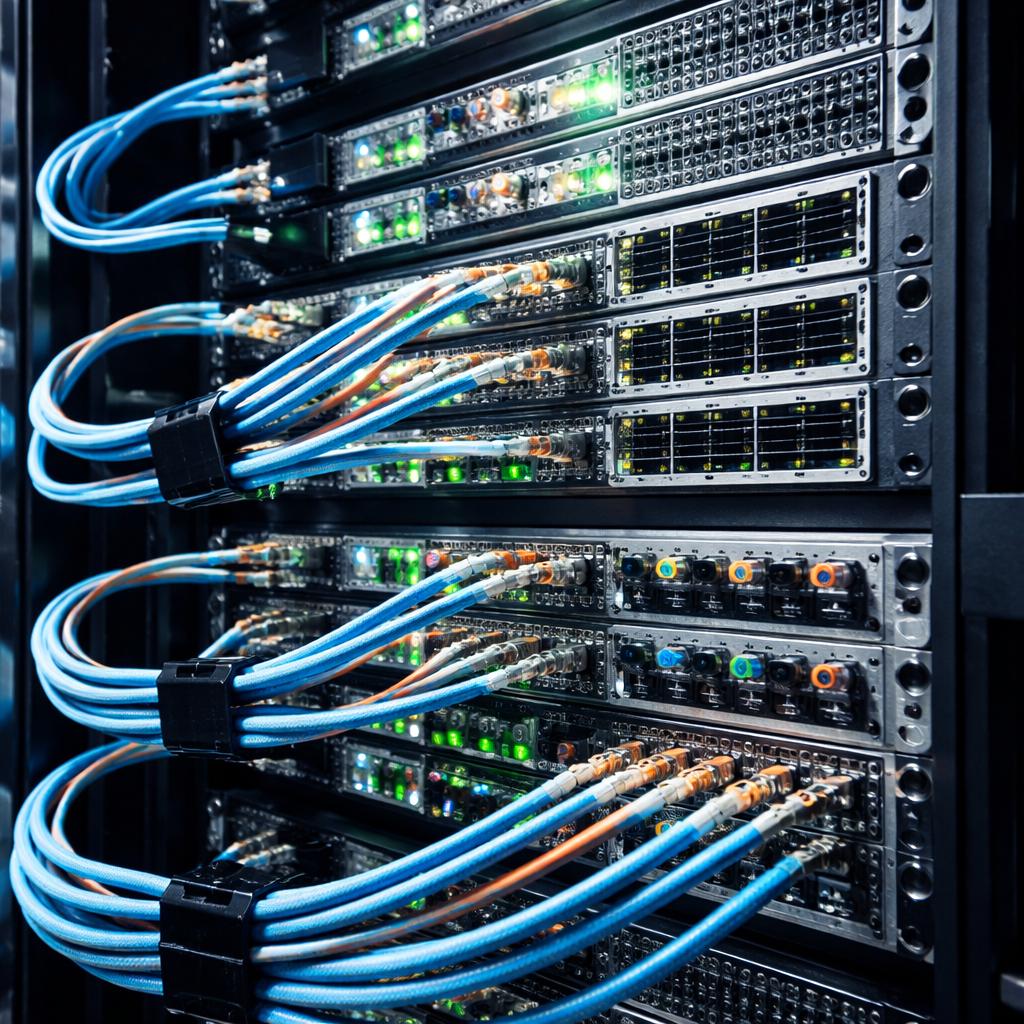
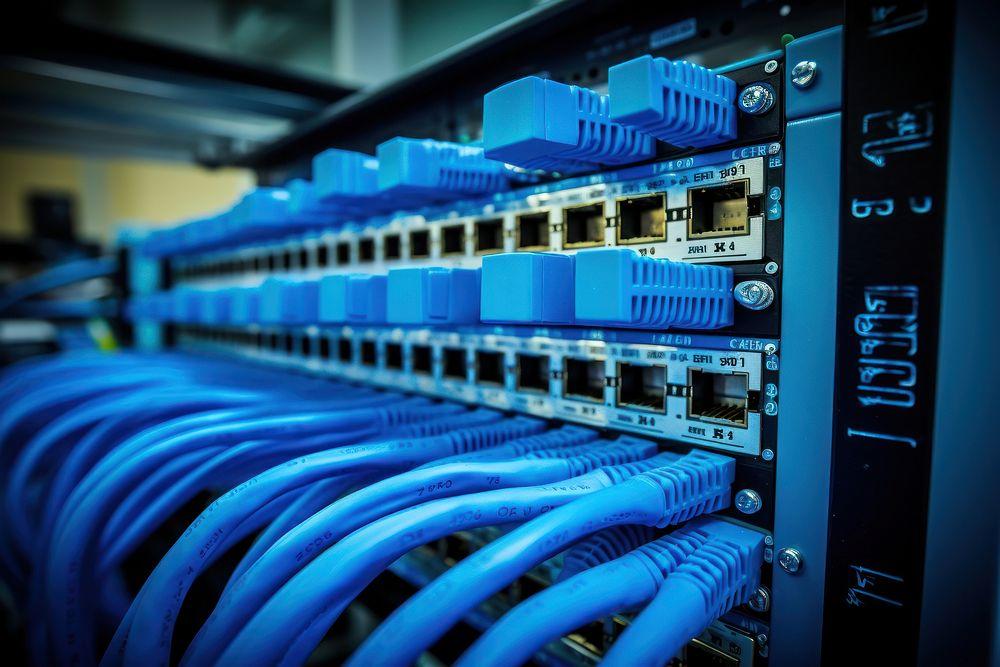
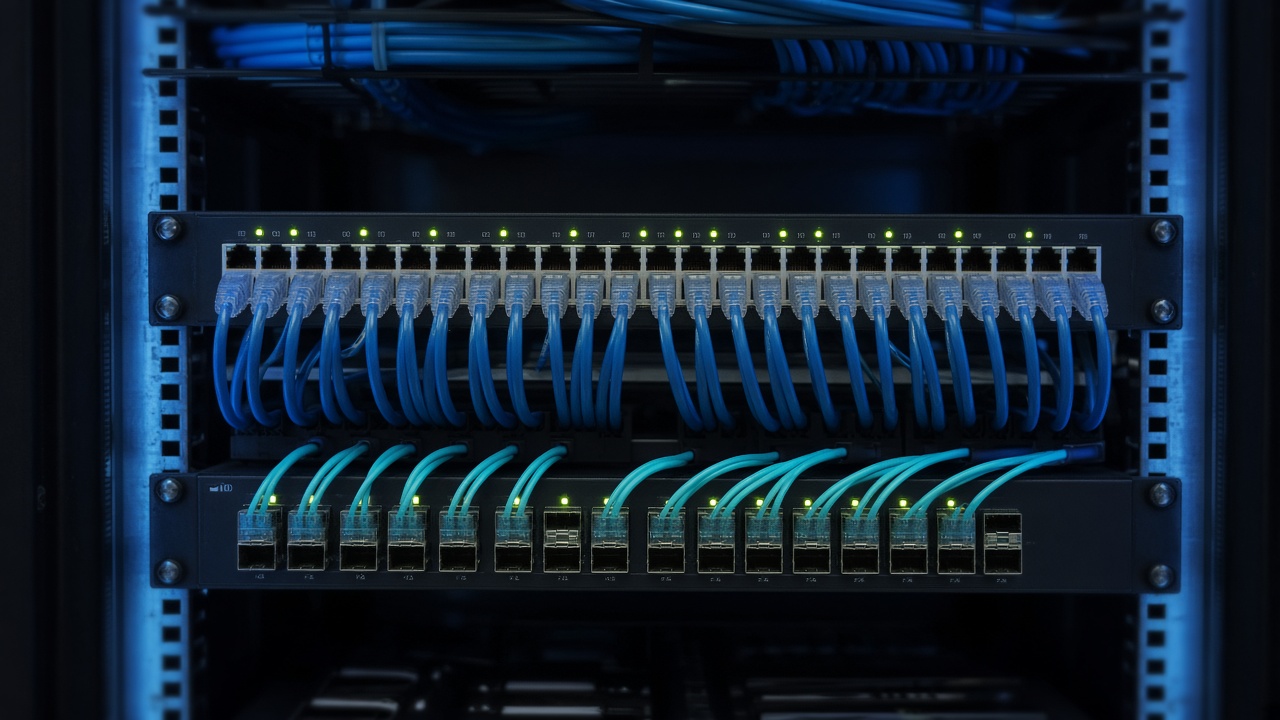
When client IT teams encounter complex network disruptions, Novatelia provides technical troubleshooting for routing anomalies, optical link packet loss, Spanning Tree loops, and firewall policy conflicts.
The work can include Wireshark packet-trace analysis, optical DDM receive-power inspection where the module supports it, broadcast-storm isolation, and BGP routing-table investigation where that protocol is in use and the change is approved.
Ordinary workplace connectivity stays with IT Support. This page is the escalation desk. The catalog wording “rapid technical troubleshooting” is not a published response-time SLA, and immediate restoration is not guaranteed.
Explore How Complex Network Faults Are Investigated
Illustrative fault-isolation scenarios — not live customer diagnostics.
01
Layer 2 loop or broadcast storm
A switching domain with redundant links can forward a loop if Spanning Tree is not blocking the extra path. STP, RSTP, or MSTP assigns forwarding and blocking roles. A bridge-priority review looks at which switch is root. Not every redundant physical link is a loop.
02
Layer 3 routing anomaly
Reachability depends on the route table, the selected next hop, and any routing policy. OSPF or BGP may be present. BGP is not assumed in every enterprise network. Evidence is the route table and neighbor state the authorized session can see. No live table is shown here.
03
Optical uplink degradation
A port, a transceiver, the fiber, and the far-end transceiver form the link. DDM or DOM is telemetry the module reports, where the equipment supports it. It is not a calibrated OLTS or OTDR measurement, and no dBm value is invented on this page.
04
Packet loss and TCP symptoms
A capture at a stated point can show TCP retransmissions, connection setup, and loss or latency symptoms. Every retransmission is not a physical-network fault. Placement, encryption, and partial visibility limit what the trace can prove.
05
Firewall policy conflict
A policy enforcement point between a source network and a destination can drop traffic that routing would otherwise deliver. NAT and routing dependencies are reviewed with the policy, under authorization. This is not an attack simulation and not unauthorized access.
Four Specialist Network Support Capabilities
01
Packet Analysis & Root Cause Investigation
Root Cause Analysis technical reports with packet-trace evidence. Wireshark observations of TCP and ARP are correlated with topology and device logs. A capture does not always prove the complete root cause.
02
Layer 2 Switching Diagnostics
Spanning Tree Protocol (RSTP/MSTP) bridge priority audit and correction when the change is approved. Loop and broadcast symptoms are investigated with port and topology evidence. An arbitrary priority change is not universally safe.
03
Layer 3 Routing & Policy Troubleshooting
Route-table evaluation, BGP policy where BGP is actually used, neighbor relationships, and firewall-policy conflicts. Optimization is not a published performance result.
04
Optical DDM/DOM Verification
Optical transceiver DDM/DOM transmit and receive power verification where the equipment supports it. Module telemetry is not a replacement for certified OLTS or OTDR testing. No dBm reading is shown.
Understanding Switching Loops and Spanning Tree Behavior
Connected switches and redundant paths need a logical forwarding topology. RSTP or MSTP can place ports in forwarding or discarding roles and elect a root bridge from bridge priority. The diagram is conceptual. It does not change a real network, and it does not recommend a priority value.
Understanding Routing Decisions and Network Reachability
A route entry selects a next hop. BGP policy, where BGP is used, can prefer or reject paths. Asymmetric routing and an ACL or firewall policy can change what a user experiences. Troubleshooting uses the evidence the authorized session can collect. No production route table is published.
From Packet Symptoms to Defensible Technical Findings
Packet traces may help investigate ARP behavior, TCP sessions, retransmissions, connection establishment, and loss or latency symptoms. Capture placement matters. Visibility may be partial. Traffic may be encrypted. Traces need context. No customer capture is offered for download, and no synthetic trace is presented as evidence.
Optical Interface Telemetry and Physical Link Evidence
Tx and Rx optical power, transceiver compatibility, and manufacturer thresholds are DDM/DOM topics where the module supports them. Fiber condition may still need a separate test. DDM/DOM is module-reported diagnostics. OLTS and OTDR are separate instruments and methods. No measured value is fabricated.
Documented Engineering Evidence for Technical Escalation
Every engagement includes the records named in the approved scope.
RCA technical report with the packet-trace evidence the scope names.
Authorized SSH session and CLI transcript, handled as sensitive operational data.
RSTP/MSTP bridge-priority audit and scoped corrective record.
DDM/DOM verification where the equipment supports it.
Access, capture, corrective changes, and retention depend on the approved engagement. No credential, token, or customer configuration is shown.
Controlled Access and Change Authorization
Remote SSH troubleshooting requires customer authorization. Access should be limited to the diagnostic scope. Configuration output is sensitive. A change needs approval. This page does not claim a certified security-management process, does not embed a terminal, and does not ask for device credentials.
Technical Protocols and Engineering References
01
RFC 793
The historical TCP citation in the service record. RFC 9293 is the later consolidated TCP specification. The historical citation stays in the record. Novatelia is not IETF-certified.
02
RFC 826
The original ARP reference, still the citation named in the service record.
03
IEEE 802.1D/w
The historical bridging and Rapid Spanning Tree citations. IEEE 802.1w was incorporated into IEEE 802.1D-2004. Current bridging, RSTP, and MSTP context is published in the applicable IEEE 802.1Q standards. Novatelia is not IEEE-certified.
When an Incident Needs Specialist Escalation
IT Support
User devices, email and account issues, and everyday workplace connectivity.
L2 & L3 Network Technical Support — Questions and Answers
01
What is Layer 2 network troubleshooting?
Investigation of switching behavior: loops, broadcast storms, Spanning Tree roles, and bridge priority, using the topology and the device evidence the engagement authorizes.
02
What is Layer 3 network troubleshooting?
Investigation of routing reachability: route entries, next hops, and, where used, OSPF or BGP policy. BGP is not assumed on every network.
03
When should an issue be escalated from IT Support?
When the problem is a switching loop, a routing anomaly, an optical interface, packet analysis, or a firewall-policy conflict, rather than a person’s device or everyday workplace connectivity.
04
What causes a broadcast storm?
A forwarding loop can multiply broadcast and other flooded traffic until the switching domain is congested. Redundancy alone does not create a storm if a blocking protocol is holding the extra path.
05
What is the role of RSTP/MSTP?
Rapid Spanning Tree and Multiple Spanning Tree select forwarding and discarding roles so a looped physical topology has a loop-free active topology. They are reviewed. They are not a universal configuration recipe.
06
What does a root bridge priority audit examine?
Which bridge is root, and whether bridge priority matches the intended design. Changing priority is not universally safe and is done only as a scoped, approved change.
07
How are routing anomalies investigated?
By reading the route table, the selected next hop, neighbor state where a routing protocol is in use, and any policy or firewall that changes the path. No production topology is published here.
08
What can Wireshark packet captures show?
ARP behavior, TCP sessions, retransmissions, and connection establishment at the capture point. A capture does not always prove the complete root cause.
09
Why might TCP retransmissions occur?
Loss, reordering, congestion, or a path problem can cause them. They are a symptom to correlate, not automatic proof of a fiber fault.
10
What are DDM and DOM?
Digital diagnostic monitoring reported by an optical transceiver: transmit and receive power and related module readings, where the module supports them.
11
Can optical transceiver power be checked?
Where the equipment supports DDM/DOM, transmit and receive telemetry can be read. Thresholds are the manufacturer’s. No reading is published on this page.
12
Does DOM replace OTDR or OLTS testing?
No. DOM is module-reported telemetry. OLTS and OTDR are separate optical test methods used when the engagement calls for them.
13
Can firewall-policy conflicts affect connectivity?
Yes. A policy, zone, or NAT decision can block a flow that the route table would otherwise forward. Review requires authorization.
14
What is included in an RCA report?
The root-cause report named in the approved scope, with the packet-trace evidence that scope includes. A capture does not always identify a single cause.
15
Is corrective configuration work automatically authorized?
No. SSH access, a CLI transcript, and a configuration change each require customer authorization and the approved scope.
16
Is 24/7 monitoring included?
No. This service does not establish a 24/7 NOC or a managed monitoring contract. The catalog phrase about rapid troubleshooting is not a response-time SLA.
17
Where can Novatelia provide support?
Direct support in Oman with remote troubleshooting for regional partners. Branch offices, partner authorization, and regional dispatch times are not published.
18
How can a customer describe a technical escalation?
Open the RFQ draft for technical support. The RFQ page keeps a browser draft. It does not submit a quotation or issue a reference.
Escalate Complex Network Issues With a Defined Technical Scope
The RFQ page keeps a browser draft. It does not submit a quotation or issue a reference.