
Engineering Connected Maritime Operations.
MARITIME, SHIPPING & OFFSHORE TECHNOLOGY
Marine networking, vessel instrumentation, navigation systems, offshore communications and industrial technology sourcing for maritime operations in Oman and the GCC.
Six Maritime Operating Environments
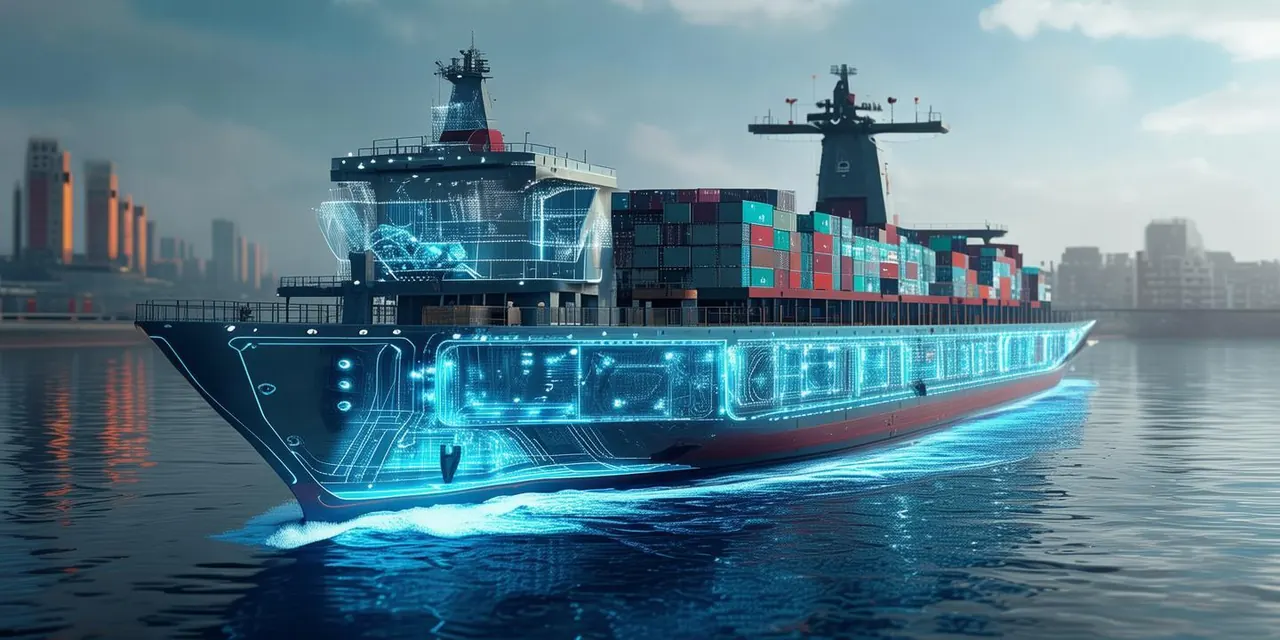
Cargo and container vessels
Bridge, engine room and cargo systems that share onboard networks, sensors and shore links on long voyages.
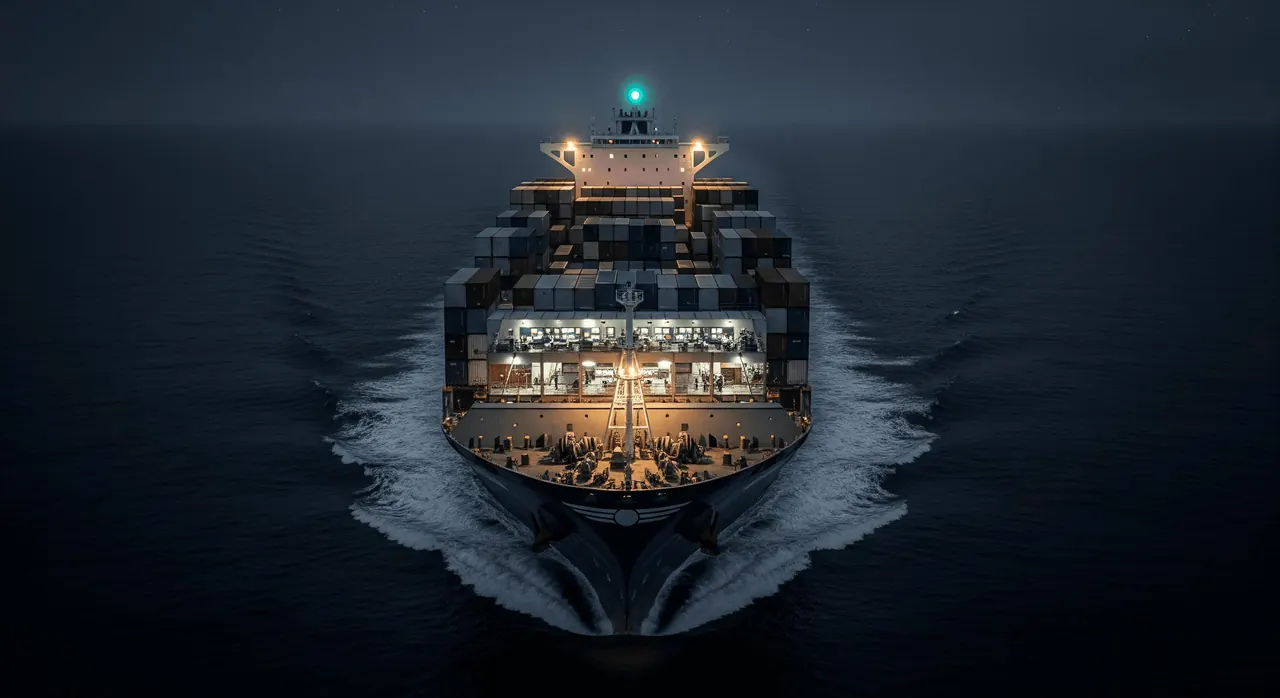
Offshore support vessels
Dynamic positioning, deck operations and communications where station keeping and redundancy shape every equipment decision.
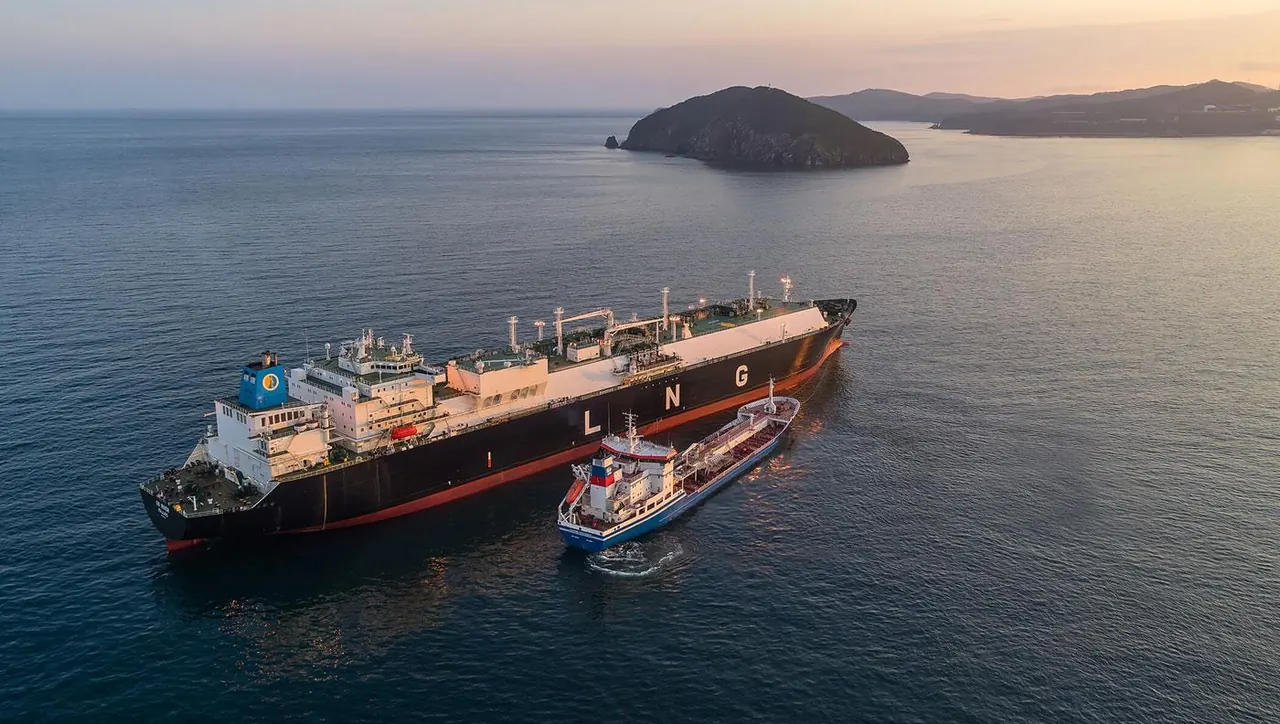
Tankers, LNG and LPG carriers
Cargo monitoring, gas detection and hazardous-area equipment where zone classification decides what may be installed.
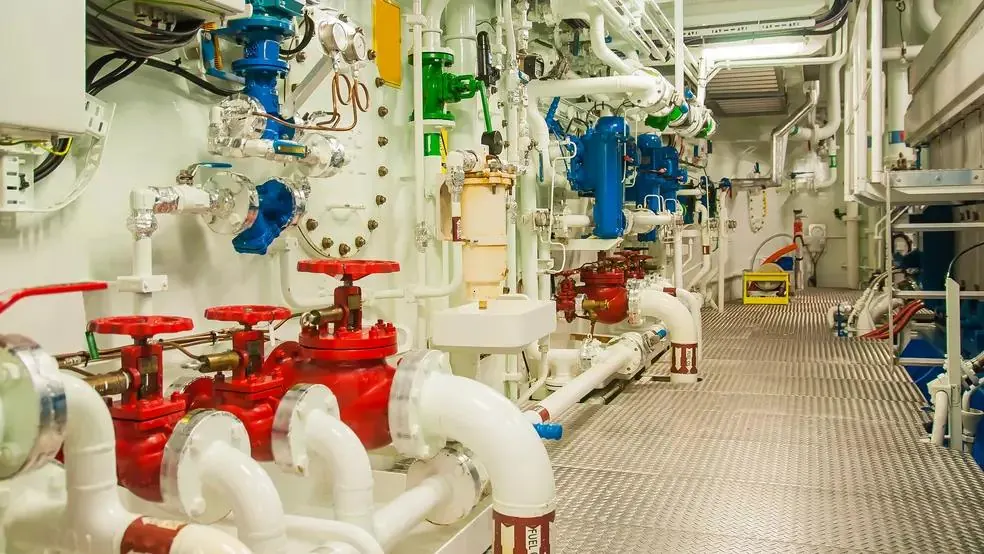
Shipyards and repair yards
Retrofit, replacement and commissioning work where existing OEM systems, drawings and class surveys set the boundaries.
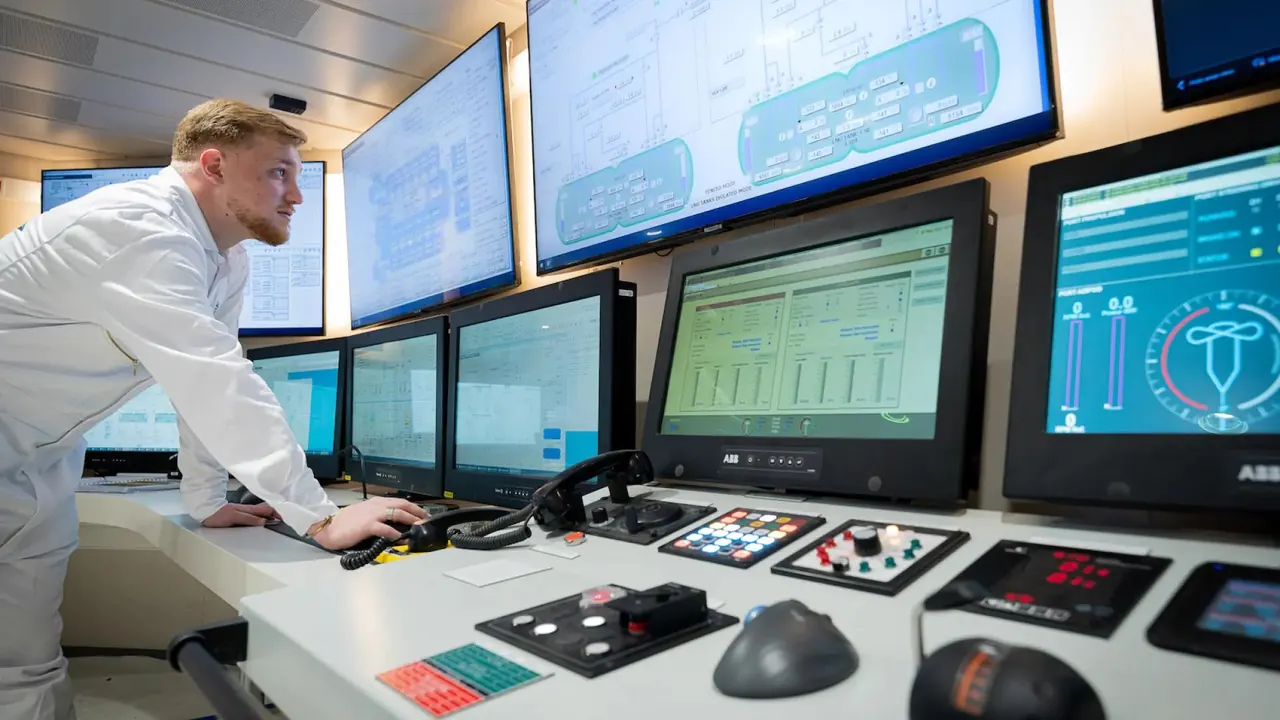
Fleet management and shore offices
Remote monitoring, reporting and secure shore connectivity between vessels and technical management teams.
Port-marine and coastal operations
Harbour craft, terminals and coastal sites where vessel and port technology meet.
See Transport, Ports & Logistics
Eight Marine Technology Capability Groups
Capability groups describe what we can help source and review. They are not certifications or installation services.
01
Marine networks
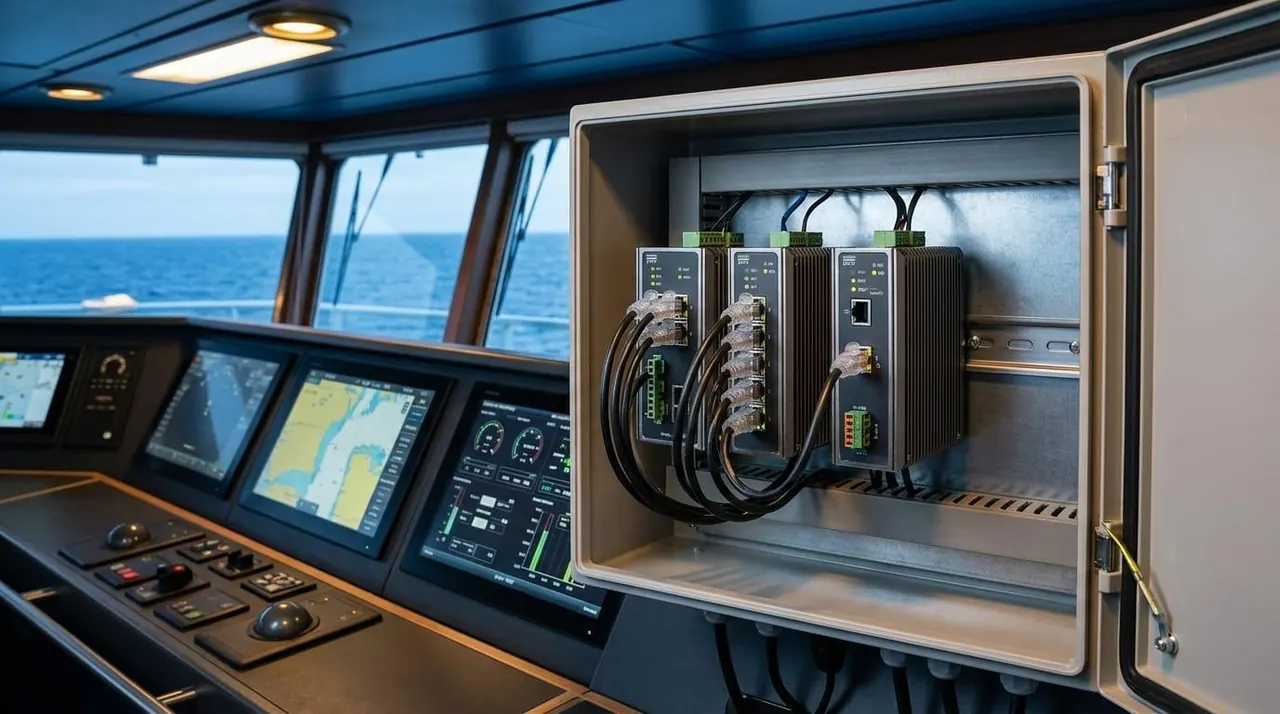
Shipboard Ethernet, fiber backbones, industrial switches and IEC 61162-450 navigation networks. Exact part numbers and their type-approval certificates are checked per project.
02
Navigation and bridge
Radar, ECDIS, AIS, GNSS and VDR equipment classes. Carriage requirements depend on vessel type, size, voyage and flag.
03
Marine instrumentation
Pressure, temperature, level, flow and tank gauging instruments, plus condition and vibration monitoring.
04
Automation and control
PLC, remote I/O, HMI and SCADA components for machinery, alarm and monitoring systems, scoped against the existing OEM system.
05
Satellite and radio
VSAT, LEO satellite services, VHF, MF/HF and GMDSS equipment classes. Radio installation and survey stay with qualified parties.
06
OT cybersecurity
Network segmentation, secure remote diagnostics and asset visibility for shipboard IT/OT boundaries, considered against IACS UR E26/E27 where they apply.
07
Electrical and power
Power distribution, UPS, cables, glands and control components selected for marine electrical installations.
08
Smart vessel (emerging)
Emerging topics such as condition monitoring analytics, digital twins and energy management. Labelled as emerging; maturity varies by vendor and vessel.
Interactive Vessel Explorer
Select a zone to see the systems and equipment families typically found there. Use the arrow keys to move between zones.
ZONE
Bridge
Navigation displays, radar, ECDIS, AIS, GNSS, VDR and bridge alarm management.
Equipment families: Bridge Navigation, AIS & Vessel Traffic
Bridge: Navigation displays, radar, ECDIS, AIS, GNSS, VDR and bridge alarm management. Equipment families: Bridge Navigation, AIS & Vessel Traffic.
Communications deck: Satellite antennas, VHF and MF/HF radio, GMDSS equipment and shore connectivity. Equipment families: Satellite & Fleet Connectivity, GMDSS & Radio.
Engine room: Engine and propulsion control, pressure and temperature instruments, vibration monitoring. Equipment families: Engine & Propulsion Control, Pressure Instruments, Vibration & Condition Monitoring.
Power and electrical: Switchboards, power distribution, energy storage and UPS for critical loads. Equipment families: Power Distribution & Control, Energy Storage & Electrification.
Cargo and tank areas: Level and tank gauging, cargo monitoring and gas detection, often in classified hazardous zones. Equipment families: Level & Tank Gauging, Cargo & Tanker Systems, Fire & Gas Detection.
IT/OT network: Servers, switches, firewalls and remote access paths that connect onboard systems with shore offices. Equipment families: Marine Ethernet & Fiber, Marine Servers & Computing, Cybersecurity & OT.
Marine Equipment Classes
Search and filter the equipment classes we research for maritime projects. Filters use only the fields recorded in our classification workbook.
Loading equipment classes…
Each row is an equipment class from our maritime classification workbook, not a stocked SKU. A category is not a part number and a brand is not an authorization. No prices, stock or lead times are shown. Live part numbers are in the product catalog.
Manufacturers We Research, by Family
These manufacturers are research candidates for sourcing. Listing a name does not mean Novatelia is authorized, appointed or partnered with that manufacturer. Availability and support terms are confirmed per request.
Navigation and bridge
Furuno · JRC · Kongsberg · Wärtsilä · Consilium
Industrial networking
Moxa · Westermo · Siemens · Hirschmann / Belden
Instrumentation and process
WIKA · Emerson · Yokogawa · Endress+Hauser
Automation and power
ABB · Schneider Electric · Siemens
Radio and safety communications
Jotron · Icom
Test and measurement
Fluke · Beamex · Megger · VIAVI
Eight Maritime Engineering Challenges
01
Connectivity in harsh marine conditions
- Problem:
- Salt mist, vibration, temperature swings and long cable runs degrade onboard links.
- Engineering considerations:
- Environmental and EMC ratings, connector and gland choice, cable routing and redundancy.
- Technology families:
- Marine Ethernet & Fiber, Marine Cables & Installation
- Action:
- Share the location, ratings and existing topology in the RFQ.
02
Compatibility with existing bridge systems
- Problem:
- New navigation equipment has to talk to existing displays, sensors and alarm systems.
- Engineering considerations:
- IEC 61162 interfaces, sentence sets, firmware versions and the integrator of record.
- Technology families:
- Bridge Navigation, AIS & Vessel Traffic
- Action:
- List the current equipment models and interfaces.
03
Type approval for the exact item
- Problem:
- A product family name does not prove that the delivered part number is approved for the vessel.
- Engineering considerations:
- Certificate holder, exact part number, revision and validity against the class society and flag.
- Technology families:
- All equipment classes
- Action:
- State the class society, notation and flag.
04
Shipboard IT/OT boundaries
- Problem:
- Remote diagnostics and shore links can open paths into machinery and navigation systems.
- Engineering considerations:
- Segmentation, managed remote access, logging and whether IACS UR E26/E27 apply to the ship.
- Technology families:
- Cybersecurity & OT, Marine Servers & Computing
- Action:
- Note the contract date, newbuild or retrofit, and remote access needs.
05
Hazardous areas on tankers and gas carriers
- Problem:
- Equipment in classified zones needs suitable protection concepts.
- Engineering considerations:
- Zone classification, IECEx or ATEX certificates and the applicable IGC or IBC Code requirements.
- Technology families:
- Fire & Gas Detection, Cargo & Tanker Systems
- Action:
- Give the zone and gas group for each location.
06
Instrument accuracy and calibration
- Problem:
- Readings drift and certificates expire across a vessel’s instruments.
- Engineering considerations:
- Range, accuracy class, calibration interval and the scope of the calibration laboratory.
- Technology families:
- Pressure, Temperature, Level, Flow instruments; Calibration & Test
- Action:
- Include tag lists and the required certificate type.
07
Power quality and continuity
- Problem:
- Critical loads need stable power through transfers and faults.
- Engineering considerations:
- Voltage, redundancy, UPS autonomy, battery chemistry and installation space.
- Technology families:
- Power Distribution & Control, Energy Storage & Electrification
- Action:
- Specify the loads, voltage and redundancy topology.
08
Delivery to a vessel or yard
- Problem:
- Parts must reach a moving ship or a dry-dock window on time.
- Engineering considerations:
- Delivery port, ship’s agent, customs handling, packing and the docking schedule.
- Technology families:
- All equipment classes
- Action:
- Give the delivery location, required date and agent details.
Standards and Requirements to Screen
SOLAS (Chapters IV and V)
IMO convention covering radiocommunications and safety of navigation. Carriage requirements depend on vessel type, size, voyage and flag.
GMDSS
Global Maritime Distress and Safety System under SOLAS Chapter IV. Required equipment depends on the sea areas the vessel operates in.
IEC 60945
General requirements and test methods for maritime navigation and radiocommunication equipment (environment and EMC). It is not a universal approval for all marine equipment.
IEC 61162 series
Digital interfaces for navigation and radiocommunication equipment: Part 1 serial data (NMEA 0183 based, current edition 2024), Part 450 Ethernet, Part 460 network security.
IEC 60092 series
Electrical installations in ships. The relevant part depends on the equipment and installation.
IEC 60533
Electromagnetic compatibility of electrical and electronic installations in ships.
IACS UR E10
IACS unified requirement for environmental test specification used in type approval of electrical and electronic equipment.
IACS UR E26 and E27 (Rev.1)
Cyber resilience of ships and of onboard systems and equipment. They apply to ships contracted for construction on or after 1 July 2024, within the scope set by the class society.
Class and flag requirements
Classification society rules and type approval (for example DNV, ABS, LR, BV, RINA) and flag-state requirements are checked for the exact part number, revision and vessel.
CE marking, type approval, EMC test reports, class acceptance and flag requirements are different things. One does not imply another. Requirements are assessed per vessel and per project, and the certificate for the exact item is requested from the manufacturer.
Latest and Emerging Maritime Technology
01
Predictive maintenance
Condition and vibration data used to plan maintenance before failures. Results depend on sensors, data quality and the analytics used.
02
Digital twins
Digital models of vessel systems for planning, training and monitoring. Scope and fidelity vary widely between offerings.
03
Hybrid energy
Battery systems, power management and shore power connections that change how vessels use energy in port and at sea.
04
AI-assisted operations
Decision support for routing, monitoring and anomaly detection. Treated as an emerging technology that needs validation per vessel.
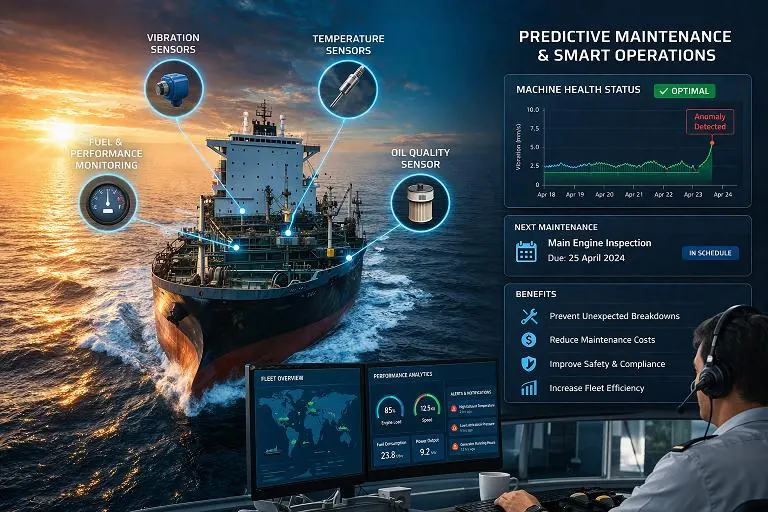
Emerging technology is described as a direction of travel, not a delivered result. Suitability is assessed per vessel.
Six-Step Marine Procurement Process
01
Scope
Vessel, location, systems involved and the outcome required.
02
BOM / BOQ
Equipment classes, quantities, spares, cables, glands and licences listed line by line.
03
Compatibility
Interfaces, power, environment and certificates checked against the existing installation.
04
Sourcing
Manufacturers and part numbers identified and availability requested.
05
Quotation
A written quotation against the confirmed line items.
06
Delivery and handover
Delivery to the agreed port, yard or office with the documents named in the order. Installation and class certification are not included unless agreed separately.
Marine Technical RFQ
Send the vessel and equipment details. Vessel name and IMO number are optional. The request goes to the same RFQ system as the rest of the site.
Equip Your Next Maritime Project with Engineering Clarity.
Tell us the vessel, the system and the outcome you need. We review compatibility and certificates before quoting.
Maritime Technology — Questions and Answers
01What maritime equipment can Novatelia source?
Equipment classes across marine networking, navigation, instrumentation, automation, satellite and radio, OT cybersecurity and electrical systems. The catalog on this page lists equipment classes, not stock items. Each request is checked for part number, availability and certificates.
02Is Novatelia an authorized distributor for the brands listed?
No authorization is claimed on this page. The brands are research candidates for sourcing. Authorization, availability and support terms are confirmed per request.
03Do you supply type-approved equipment?
Type approval belongs to the exact part number, revision and class society. We request the manufacturer certificate for the exact item. A product family name is not proof of approval.
04Do IACS UR E26 and E27 apply to my vessel?
They apply to ships contracted for construction on or after 1 July 2024, within the scope set by the class society. For older ships, class and owner requirements decide. Include the contract date in the RFQ.
05Do you install equipment or certify it with class?
This page covers sourcing and engineering review. Installation, commissioning, radio surveys and class certification are not promised here and are arranged only when agreed in writing with qualified parties.
06What should I include in a marine RFQ?
Vessel type, location on board, manufacturer and model if known, quantity, delivery location and date, and certificate needs. Vessel name and IMO number help but are optional. Never send passwords or system credentials.