

Government & Public Sector
IND-02 · PUBLIC-SECTOR INFRASTRUCTURE
Engineering Infrastructure Around Public-Sector Requirements
Sovereign infrastructure, air-gapped security networks, and defensible tender documentation.
The page describes government IT requirements, separation, tender traceability, and contractual maintenance. It describes sector operating context, not completed Novatelia government projects. Not every government system is air-gapped, and this page is not an authorization to build classified networks.
Explore the Government Infrastructure Assurance Journey
Six stages show how requirements can become evidence. The sequence is illustrative.
Illustrative engineering assurance workflow — not a government-approved process or completed customer project.
01
Define Requirements
Operational needs, governance constraints, authorized classifications, and technical scope. Classification is not assigned here.
02
Establish Architecture Boundaries
Network separation, administrative domains, management paths, and the physical or logical controls the design requires.
03
Verify BOM/BOQ
Model, part number, quantity, a traced requirement, and a datasheet. Verification is not a tender award.
04
Prepare & Stage Equipment
Approved firmware baselines, configuration notes, physical identification, and staging records, when those tasks are in scope.
05
Test & Validate
Approved methods, observed results, exceptions, and retests. No sample measurement is published.
06
Document & Handover
Test records, as-built documentation where included, acceptance evidence, and support handoff.
Three Critical Requirements in Public-Sector Infrastructure
01
Strict physical separation of classified and administrative networks
Physical isolation and logical segmentation are different. A VLAN is not an air gap. Any link between domains needs an authorized design. This page does not claim classification authority and does not publish sensitive configurations.
02
Stringent procurement requirements requiring line-by-line BOM verification
Line-by-line BOM review traces a specification to a part and records variances. It does not promise a tender award or a regulator’s approval.
03
Extended warranty and 100% on-site maintenance response commitments
Warranties, spares, and response times belong in a contract. The source phrase about 100% on-site maintenance is not a universal attendance guarantee. A manufacturer warranty is not Novatelia field labor.
Understanding Physical Isolation and Network Segmentation
A physically isolated environment is a separately controlled communications path when the security design requires that separation. A logically segmented environment shares infrastructure and uses routing and security controls. An approved interconnection is an explicit exception with its own controls.
A VLAN is not an air gap. Two colors on a diagram do not prove separation. No real government network is drawn here.
From Tender Requirement to Verifiable Equipment Specification
The matrix below is fictional educational data. Technical conformity depends on the real tender and valid evidence. Nothing here is a compliance pass.
Illustrative sequence: tender requirement, technical specification, BOM item, manufacturer evidence, compliance status, clarification or exception.
01
Part identity
Part number, manufacturer, and quantity are checked against the line. This example is not a real tender.
02
Interfaces
The specified port, optic, or protocol is compared with a datasheet. A mismatch becomes a clarification.
03
Performance language
A performance sentence is only as strong as the evidence attached to it.
04
Warranty and licensing
Warranty duration and license terms are commercial facts, not engineering inferences.
05
Supporting document
A datasheet, a test method, or a clarification note has to be identifiable.
06
Deviation
An exception stays open until the buyer accepts it. This page cannot close it.
Data Location, Infrastructure Control and Governance
Useful questions are where data sits, which host it depends on, who may administer it, and which policy applies. Those answers change with the entity and the information.
This page does not say all public-sector data must remain in Oman, and it does not claim a sovereign-hosting accreditation.
Preparing Approved Infrastructure Before On-Site Deployment
Possible tasks include hardware inspection, model and serial checks, firmware verification, a baseline configuration, labeling, documentation, and a functional check. Not every project includes all of them.
No certified burn-in result is claimed without records, and no device is administered from this page.
Administrative Visibility and Audit-Oriented Infrastructure
Relevant topics are authorized administration, logging, security events, identity logs, SIEM where scoped, privileged access, and retention that a policy names.
Continuous SOC operations are not claimed. No security event and no official audit result is fabricated.
Cybersecurity Considerations for Government Environments
These names are project topics. They are not a sector certification, a clearance, or a managed SOC. None is deployed by default.
01
Security Monitoring & Logging
Monitoring and logging follow the sources and the retention the agreement names. It is not a sector certification, a clearance, or a managed SOC.
02
Endpoint Security & EDR
EDR applies to endpoints the product and the policy allow. It is not a sector certification, a clearance, or a managed SOC.
03
Network Segmentation
Segmentation covers both physical isolation and logical separation. They are not synonyms. It is not a sector certification, a clearance, or a managed SOC.
04
Privileged Access Management (PAM)
Privileged access management controls administrative identities. It is not a clearance. It is not a sector certification, a clearance, or a managed SOC.
05
SIEM & Centralized Auditing
SIEM centralizes events only when collection and review are scoped. It is not a sector certification, a clearance, or a managed SOC.
06
Zero Trust Network Architecture
Zero trust here means identity, device context, and least privilege. It is not a product badge. It is not a sector certification, a clearance, or a managed SOC.
07
Data Protection & Endpoint Control
Data protection and endpoint control follow the handling rules for that information. It is not a sector certification, a clearance, or a managed SOC.
Engineering Acceptance Requires Measured Evidence
Fiber insertion loss and an OTDR trace are different methods. Tier 1 or Tier 2 testing depends on the cabling standard and the scope. RFC 2544 benchmarks a device. It does not certify production application performance. A named test instrument is not itself a certification.
No loss figure, trace, or throughput number is invented here, and no sample is dressed up as a customer acceptance record.
Define Support Responsibilities Before Deployment
A support discussion names covered equipment, warranty conditions, windows, escalation contacts, response times if contracted, spares if confirmed, exclusions, and documentation duties.
There is no universal 100% response guarantee and no invented 24/7 coverage.
Oman Government Procurement and Cybersecurity Context
- Oman National CERT security baselines
- Government Tender Board procurement regulations
Oman National CERT baselines and Government Tender Board regulations are source references. Current names, documents, and whether a rule is mandatory have to be confirmed for the entity and the procurement route. Novatelia is not described as approved by a regulator, and no tender registration or security clearance is claimed.
Related Government Infrastructure Solution Architectures
Two related architectures. A public-sector project does not automatically need a spine-and-leaf fabric, and neither link is a sector certification.

Cybersecurity & Security Infrastructure
Security architecture and relevant controls. The destination is not edited, and its marketing absolutes are not repeated here.
Cybersecurity & Security Infrastructure
Data Center Infrastructure & Fabrics
Compute, connectivity, and storage dependencies when the project actually places systems in a data hall.
Data Center Infrastructure & Fabrics
Engineering Services Supporting Public-Sector Projects
Three distinct services. They are not merged into one automatic engagement.

Technical Assessment & BOM/BOQ Review
Item-level review against the documents supplied.
Technical Assessment & BOM/BOQ Review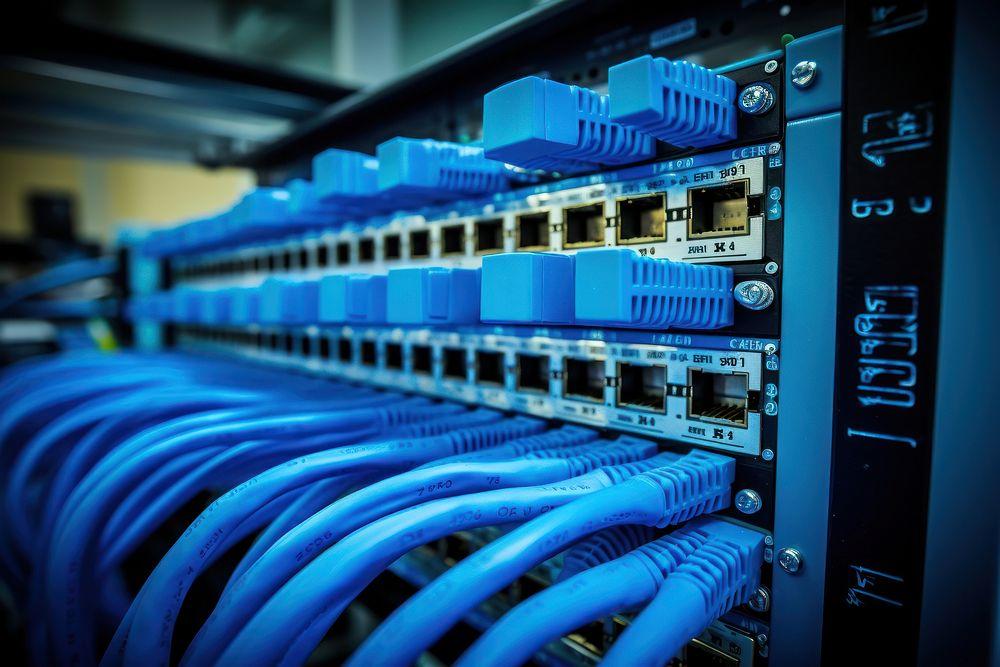
Hardware Pre-Configuration & Staging
Approved preparation before delivery. Not live administration.
Hardware Pre-Configuration & Staging
Testing, Validation & Handover
Scoped tests and records. A method is not a pass.
Testing, Validation & Handover
Sourcing the reviewed parts is a separate step, described under multi-vendor technology procurement.
From Formal Requirements to Verified Infrastructure Delivery
Five educational categories. They are not described as an Oman government mandate, and they are not project milestones.
01
Interpret project requirements
Read the actual statement of needs and the constraints that apply to that entity.
02
Reconcile architecture and BOM/BOQ
The drawing and the parts list have to describe the same system.
03
Prepare approved hardware and configurations
Only the tasks the scope includes.
04
Validate agreed technical criteria
Observed results, not a fictional matrix.
05
Deliver documented handover and support arrangements
Support terms stay in the contract.
Government & Public-Sector Infrastructure — Questions and Answers
01What is government IT infrastructure architecture?
It is the network, security-boundary, and documentation design shaped by a public-sector operating and procurement context. This page is not a completed government contract.
02What does sovereign infrastructure mean?
Here it means the organization cares where systems are hosted, who administers them, and how domains are separated. It is not a claim that every public data set must stay inside Oman, and it is not a national-cloud accreditation.
03What is an air-gapped network?
An air gap is physical separation: the sensitive environment has no shared communications path with another network. Whether a system needs one is an authorized classification decision.
04Is a VLAN equivalent to an air gap?
No. A VLAN is logical segmentation on shared infrastructure. A VLAN is not an air gap.
05Why might government systems require physical network separation?
Some information classifications do not allow a shared cable plant or a shared switch fabric. The decision belongs to the system owner, not to a diagram color.
06How are classified and administrative environments differentiated?
By the classification the authority assigns, the physical or logical boundary required, and the people allowed to administer each side. This page does not assign classifications.
07What is technical BOM verification?
It checks each bill-of-materials line for model, part number, quantity, and a stated requirement. It does not award a tender.
08What is the difference between BOM and BOQ?
A bill of materials lists items and parts. A bill of quantities emphasizes counts and units. A review can trace both. Neither document is an approval.
09How are tender specifications checked against equipment datasheets?
A reviewer compares the specified interface, performance, and warranty language with current manufacturer evidence and records any gap as a clarification or exception.
10What is an equipment compliance matrix?
It is a table that traces a requirement to a product claim and a source document. Any example on this page is fictional and educational. It is not a pass result.
11What is hardware pre-configuration?
It is approved preparation of equipment before site delivery, such as identity checks, firmware baselines, and documented settings. It is not live administration of a government network.
12What is controlled staging?
Staging is a recorded holding point where hardware is identified, configured to an approved baseline, and released. Not every project includes every staging task.
13What evidence is required for infrastructure acceptance?
The contract names the tests, the observed results, the exceptions, and who signs. This page does not invent those records.
14What is the purpose of OTDR testing?
An OTDR shows reflective events along a fiber. It is a different measurement from end-to-end optical loss. Needing either test depends on the cabling standard and the scope.
15What does RFC 2544 benchmarking measure?
RFC 2544 is a benchmarking method for network devices. A benchmark is not automatic proof of production application performance.
16What is privileged access management?
It governs administrative identities: who may use them, how they are checked out, and what is logged. It is not evidence of a government security clearance.
17Can SIEM be relevant to public-sector security?
Yes, when the scope includes log sources and a review process. A SIEM design is not a certified government SOC.
18Does Novatelia provide a certified government SOC?
No. Logging and monitoring arrangements are project topics. This page does not claim a staffed or nationally accredited operations center.
19Does this page confirm Oman government security approval?
No. It does not confirm regulator approval, tender registration, a contractor class, or a security clearance.
20Does Novatelia guarantee 100% on-site response?
No. The source record mentions 100% on-site maintenance. Response exists only as a term in a signed contract, and a manufacturer warranty is not the same as Novatelia field labor.
21How are warranty and SLA obligations defined?
By the equipment covered, the warranty conditions, the maintenance window, the contacts, and the exclusions in the agreement. A 24/7 dispatch promise is not published here.
22What Oman procurement requirements may be relevant?
Tender Board rules and National CERT baselines may apply to a given entity and procurement route. Applicability has to be checked against the current document. This page does not quote an unverified clause as a universal duty.
23Does an industry blueprint represent a completed government project?
No. It describes sector context and engineering considerations. It is not a customer reference.
24How can a public-sector organization request infrastructure scoping?
Open the RFQ draft or contact Novatelia. The RFQ page keeps a browser draft. It does not submit a quotation or issue a reference. Do not send classified material through the public page.
Define Your Public-Sector Infrastructure Requirements
The RFQ page keeps a browser draft. It does not submit a quotation or issue a reference.
Opening the RFQ page keeps a browser draft. It does not submit a quotation or issue a reference. The public RFQ is not a place for classified documents.