
NFC, BLE and UWB: The Future of Smart Building Access
Comparison
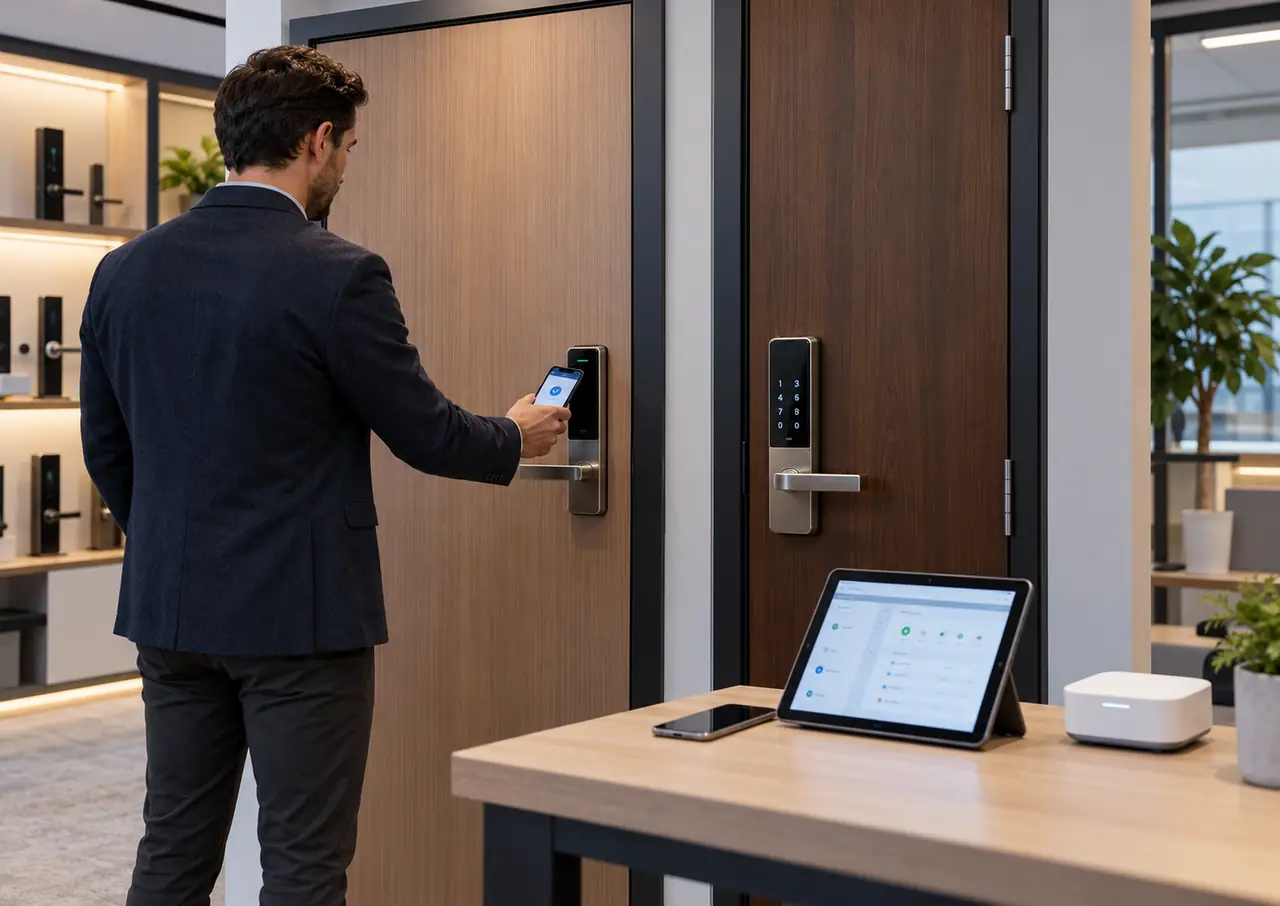
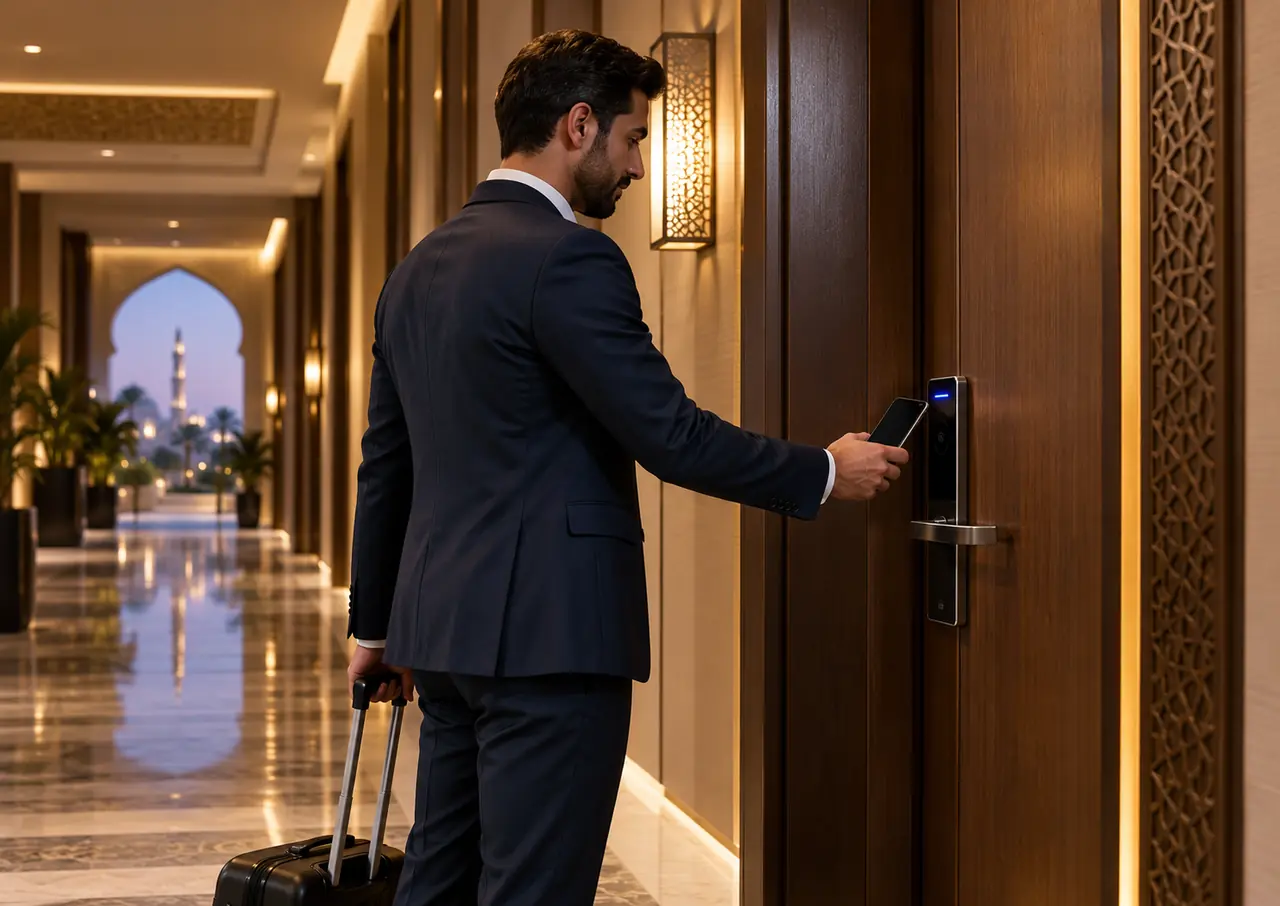
Phones and wearables can open doors over three short-range radios: NFC, Bluetooth Low Energy (BLE) and ultra-wideband (UWB). Each gives a different user experience and needs different hardware. The Aliro 1.0 standard uses all three. This guide compares them for offices, campuses, residential towers and hotels.
Last reviewed 19 October 2026. Published by Novatelia. Labels used on this page: Documented means shown in a CSA certification record or stated in an official manufacturer, platform or regulator document. Announced means officially announced as future or roadmap work. Not documented means no public source was found, so it must be confirmed with the manufacturer.
The three radios at a glance
| NFC | Bluetooth LE | UWB (with Bluetooth LE) | |
|---|---|---|---|
| User action | Tap the device on the reader | User-initiated, from a distance | Hands-free as the user approaches |
| Role in Aliro | Tap-to-access; Silicon Labs notes it is required for certification | Longer-range, user-initiated access; discovery and set-up signalling | Secure distance measurement for hands-free entry |
| Relay-attack resistance | Needs a physical tap | Depends on the implementation | CSA says UWB is the only Aliro option with secured, centimetre-level ranging |
| Wallet support in the sources reviewed | Tap with Apple home key and Samsung Digital Home Key (shown with the Nuki keypad) | Not stated per wallet | Samsung on selected devices from April 2026; Apple announced for an LG lock (US and Canada) |
| Planning fit (guidance) | Every mobile-access door | Gates and car parks | Premium hands-free doors |
NFC: the baseline
NFC is the most widely supported option and the simplest for users to understand: tap and go. Silicon Labs notes that NFC is mandatory for Aliro certification and that, on supported phones, it can work even when the battery is depleted. Nuki, for example, documents a power reserve for Apple wallet keys in Express Mode and for selected Samsung devices when used with its keypad.
Bluetooth LE: convenience at range
BLE lets a user open a door from a few metres away, for example a car-park barrier. In Aliro it supports user-initiated long-range access and the set-up signalling for UWB. Some commercial lock hardware already accepts BLE credentials alongside cards; Last Lock, for example, lists Bluetooth LE credential support for its Core lock.
UWB: hands-free and precise
UWB measures distance precisely and securely, so a door can open when an authorized phone approaches, and not when it is merely nearby. CSA’s September 2026 position paper notes that practically all UWB devices use Channel 9 (about 7.7 to 8.3 GHz) and warns that studies under WRC-27 Agenda Item 1.7 could identify that range for high-power mobile services, which would degrade UWB. Treat UWB as an enhancement on top of an NFC baseline.
Product examples and what they document
- Nuki Keypad 2 NFC: CSA states it implements Aliro via NFC (CSA26003ALR80003-NF). Bluetooth LE or UWB Aliro support is not documented.
- Last Lock Core: hardware for 125 kHz, NFC, Bluetooth LE and UWB credentials, with an FCC UWB grant. Which Aliro transports its CSA certificate (CSA26006ALR80006-NF) covers is not documented.
Novatelia is evaluating these products and is in discussion with the manufacturers. It is not a partner or authorized reseller of either.
How to choose for your building
- Make NFC the baseline for every mobile-access door.
- Add Bluetooth LE where users need range, such as gates and car parks.
- Add UWB for premium hands-free doors, only where the lock, the wallet and the phones all support it.
- Plan the building network and power for readers and hubs from the start. See smart building infrastructure.
- Keep a card or PIN fallback for visitors and unsupported phones.
In Oman, confirm the type-approval route for each radio with the TRA before importing equipment. The TRA regulation on telecommunications device approval (Decision 1152/2/19/2024-12) is the starting point.
Questions and answers
01What is the difference between NFC, BLE and UWB for door access?
NFC needs a tap on the reader, BLE works from a distance when the user triggers it, and UWB measures distance precisely so a door can open hands-free as an authorized user approaches.
02Which is the most secure option?
All three carry the same Aliro public-key cryptography. CSA states that UWB is the only Aliro option with secured, centimetre-level ranging and relay-attack resistance. NFC requires the phone to be tapped on the reader.
03Do all phones support UWB door access?
No. Samsung documents UWB hands-free entry on selected devices only, Apple has announced it for one lock in the US and Canada, and support varies by brand and region, so NFC remains the baseline.
04Can one reader support NFC, BLE and UWB?
Yes. Aliro defines NFC, NFC with Bluetooth LE, and NFC with Bluetooth LE and UWB configurations. The CSA record and the manufacturer’s documentation show which ones a product implements.
05Is Novatelia an authorized partner of the manufacturers named here?
No. Novatelia is evaluating products and is in discussion with manufacturers, but is not a partner or authorized reseller.
Related pages
Discuss an Aliro or mobile-access requirement
Tell us about the property, the doors, the systems already in place and the timeline. Novatelia will reply with an engineering scope that separates what is verified from what still needs confirmation. No price is published on this page.
Sources
Public sources checked on 19 October 2026. Product and wallet support changes often, so confirm each item with the manufacturer before a commitment.
- Connectivity Standards Alliance: Introducing Aliro 1.0 (26 Feb 2026)
- Connectivity Standards Alliance: Aliro UWB position paper (Sep 2026)
- Silicon Labs: Aliro fundamentals
- Samsung Research: CSA Aliro 1.0 standardized access control
- Samsung Newsroom: Samsung Wallet launches Digital Home Key (2 Mar 2026)
- CSA certified product record: Nuki Keypad 2 NFC
- CSA certified product record: Last Lock C100
- Last Lock: product page
- Nuki: Keypad 2 NFC product page
- Oman TRA Decision 1152/2/19/2024-12 on telecommunications device approval (via decree.om)